
SPEAKER | BORIS BERJAN
How To Use Real-Time Biodata To Change Your Life Forever
Scroll below to watch session...
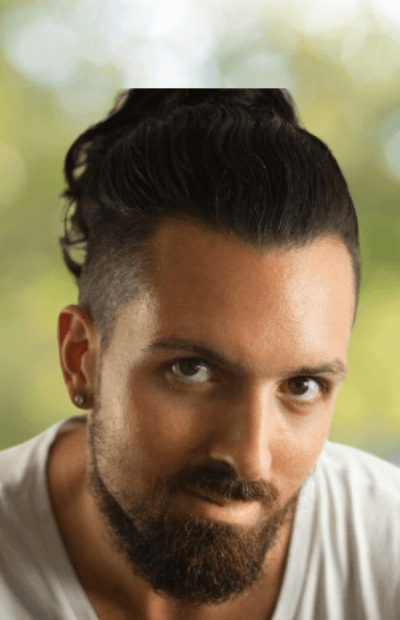
SPEAKER | BORIS BERJAN
How To Use Real-Time Biodata To Change Your Life Forever
3 Key Takeaways
The big metabolic problem (1 billion ppl with metabolic dysfunction)
How current solutions fail
The future of health tech and how it solves the metabolic health crises
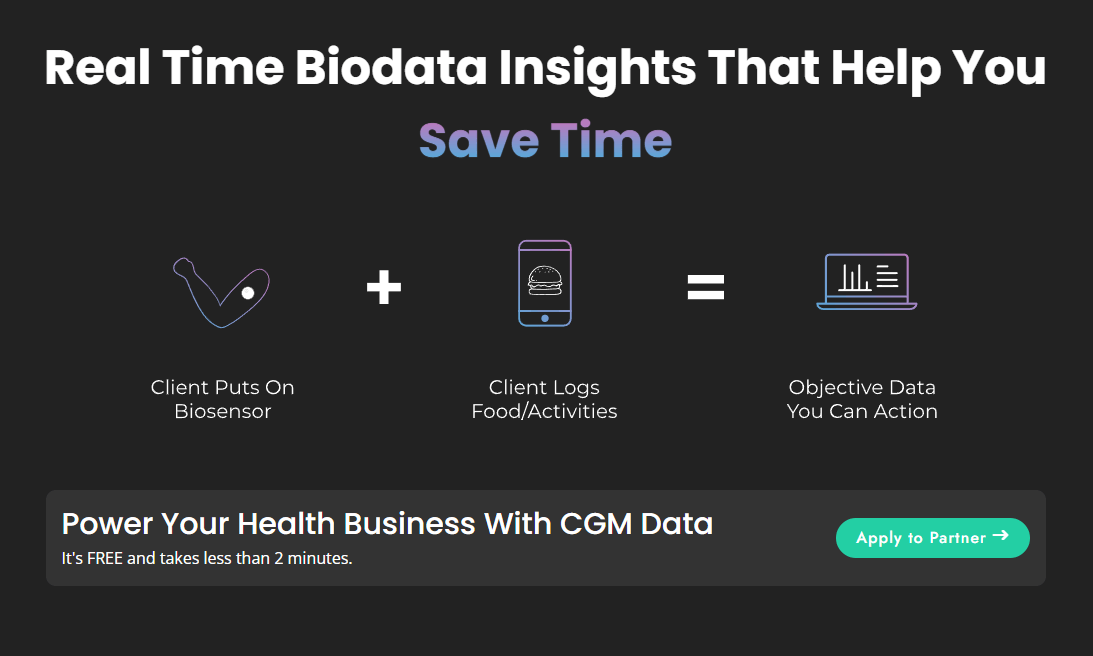
Hey everyone, my name is Boris. I'm the co-founder and CEO of Thea Health. Thea is a company that makes real time biodata from biosensors that stream into an app actionable and the way we do that is we leverage biosensors and our software where the software streams data from your body and then we give you a personalized score and what that looks like and push that back to the provider. So over building Theia and Now having over 110 million biodata points on tens of thousands of people, I have become very knowledgeable in the area of metabolic health. What impacts it, how it impacts it.
And to begin, probably the best way to start here is what even is metabolic health. So the way we define metabolic health is how does your body utilize the inputs that you give it for energy. So obviously food is one of the primary sources of energy for humans. However, how that's metabolized or how your body uses that food has many different inputs. That is stress.
You know, if you're stressed, how you slept, exercise, environmental factors, hereditary factors, all these things, how your metabolism is reacting to the things that you're giving it and how efficient is it at doing so. Today I am going to give you guys a little bit of a backstory on how I got into this field, how I got to build Theo Theia is now actually at over 2, 800 practices have integrated US and like I said, we're almost over 110. We are over 110 million data points collected on people. So we have a lot of data. So everything I'm going to go through in terms of actionables and takeaways here is going to be based off that data.
So everything that we're going to be talking about has rooted fundamentals in analysis more so than a philosophy. If that sounds exciting, let me dive into how did I get into this field and what does. You know, what was the for me U maybe you are in a similar situation now as I am high growth, you know, startup, lots of deliverables, every day is very busy, etc. And I will talk about how in these environments you can set yourself up success. But to get to that point, it's important to note where I came from so you have more and greater context and you can relate with me better.
I actually never thought about Thea until I got really, really sick twice in my life. So going all the way back to when I was seven years old, being a young boy, I I had all these health issues, right? And it was go to all these doctors, do all these like roses, etc. And nobody really knew what was going on with me. And so I basically spent a lot of time in doctor's offices doing all these tests.
And I had a little bit of a disconnect immediately with these processes because, you know, nobody really told me going on. I wasn't in the loop. Sure, you could argue that. I'm seven, but at the same time, you know, it is my body and I would like to know what's going on. So, long story short, I was going to these health retreats to get better.
They felt almost like prisons more than health retreats. I was in these shady rooms with doctors and eventually they're like, okay, we figured it out, you have asthma. And they told me there's nothing you can do about this. We're going toa put you on, you know, a puffer that anytime you're having an asthma attack, you have to use it or it could be fatal. And we think it's probably genetic.
There's nothing else that you can do. This is already a disconnect to me because nobody in my family has or had had asthma. Even at the age of seven. That felt weird to me that that was the reasoning behind it. And magically, two years later, I was getting, you know, testing done for my lungs and just seeing what needed to be done.
And they're like, hey, you don't have asthma anymore. Your lung capacity is now better than most kids. And I was like playing soccer every day. So it was the first time in my life like one plus one did not equal to. And I really, since that eight stage in my life, I kind of thought about, well, hang on, all the white coats were wrong and they're the experts and why is that the case?
Right. So going further into my life, I have this joke that if you get one chronic disease and you're lucky enough to battle through it, you shouldn't be able to get to as you know, that's not how life works. And unfortunately, you know, in my later teenage years, I started to have really bad stomach issues, cramping, bloating, some other, some other side effects as well. And it wasn't until my like early, early 20s, like 21ish, where I lost £50 less, more than £50 in less than three months. And just to put some context here, I'm 6 4.
So when I lose weight, like everybody notices. When I gain muscle, nobody notices. I have like the opposite problem of most people. But that aside, when I lose £50 and I was playing varsity basketball. Like, I was like, very, very active, Good amount of muscle on me, etcec.
I was very active. And then once I lost all that way, it looked like a skeleton, like there was almost nothing on me. And they were doing all these tests on me again, like it was deja vu. Okay, what's going on? How are you doing?
What's the approach we should take, etc. And so when people saw me, they couldn't not react right, because when you're that sick and you look that like you lose so much of your weight, it's impossible not to look frail. And almost on your deathbed, which people were asking me, like, you know, are you evennna make it like, what's going on here? So the diagnosis became severe Crohn's disease. And just to put some context on here, severe Crohn's means I had my small intestine to my large intestine.
The. The pathway between those two was almost entirely closed due to scar tissue from inflammation in the area. And when I would go and overeat a little bit or I got excited because I could eat a little bit, many times, something would get stuck in that area because it was almost closed. And in that scenario, my body would revolt against me. And basically I would start throwing up for hours and hours.
I'm talking like 15, 16 hours, just throwing up. Because the body was in such a shock, it did'not know what to do other than just like eliminate everything out of the body to see where we land. And eventually the only thing that would help me is let's get to the hospital, the E room, and when we get there, let's give me IVs and anti nausea fluids. And in that scenario, it would really calm my body down because I would get perfect hydration, perfect nutrition, essentially. And the body would say, okay, something has been stabilized.
We're getting nutrients and we can calm down. We don't have to keep eliminating all these wastes. I think the lowest point in my life was. I really remember one time I was so sick I was sleeping on the toilet seat because I was throwing up so much that I fell asleep and I was so tired, but in my sleep, I was also throwing up. And I, like, faintly woke up, realized that that was happening, and fell back asleep.
And I thought, man, something's got to give here because this is really bad. Going a little bit further ahead now, once I got that diagnosis, I had my get healthy or die trying moment where I was saying, okay, I'm, you know, they g they got me ready for pre ops and they're like, we are going toa do an operation. We don't know which one, but let's get ready for that. You're never going toa get better. You're only going to get worse from this date.
And I decided, okay, let me just do everything I can to get better. So I went out, I hired every different doctor there is on planet Earth. I of functional medicine, doctor, naturopath, an energy healer, a Chinese herbalist, and two gastro, etc. I had everything going on and you know, the, the odds of me getting better were so slim that I just made sure that like my only way to measure this success was can I stop ending up in the hospital so frequently. So like, what are the, can I add days between hospital visits?
That would be ideal. Ironically enough, all those doctors, even though they were trying to be helpful, the biggest, you know, issue I had with this whole process was, you know, it was table stakes to feel terrible. So just feeling bad, I always felt bad so that there was nothing, you know, day to day that like really changed that. But when I was trying to make a decision on, you know, what what do I do, what do I eat, what supplements, what medications, what, you know, what protocols should I be on. The doctors really had different philosophies, you know, and they would all make sense.
Like for example, you should fast to let your gut and intestines heal because if you do that like you'll heal faster versus you should eat every 10 minutes. At least you're sustaining some energy in the body and you and gain some weight back to fight this off again. Like if you compare those two approaches, they actually logically both sound accurate, right? So with that being said, I spent a lot of my time visiting doctor's offices. I was writing everything down that I was doing because I was desperate not to end up in the hospital or throwing up for hours.
And then most of my meetings were just going over what I was doing and then spending a very little time on the next strategy or iteration. And this really was frustrating because it's one thing to feel terrible and if you always feel terrible, it is what it is. But not knowing what to do and then not being able to see if it's working was the biggest pain point I had both times that I was sick. So going forward even further, I luckily through sheer experimentation I got to a point where we went to the pre ops, they called it off. So like you got way better, way faster than anybody we've ever seen.
And it took a good two years and since then I haven't been in the hospital. I've been able to travel the world, eat spicy food, everything I couldn't do right. I eventually got off all meds and got cleared on a colonoscopy. There was no signs of disease. It doesn't mean I've had, I haven't had problems since, but not to that severity of that extent.
All right, that brings us to how did everything, how does all of this mold into into thea? Well, first, I have a unique lived experience where I've gone through, I honestly think every single medical process or system or practitioner or type that there really is. There's no surprises to me and I really, truly understand everyone's approach and how they differentiate each other. Second, is that with that being said and all this support, there was no way for my body to give me insight into what's going on. So I always had this vision of man.
If I just knew what was going on in my body when I was sick, it would have been tremendously helpful to understand what decisions to make. Second to that, even when I'm not sick, what decisions am I making today that are going toa either pay off in five, 10 or 20 years or really, really not pay off, you know, over the long term. And so I eventually got into ad tech. So advertising technology. And this was interesting to me because that technology is amazing.
Like I can see everything that you do online, like which ads did you click on, what you know, what pages did you visit, how long were you there? What are you, you know, what did you buy? What didn't you buy? And I thought to myself, you know, we have a lot of this technology that's similar across everything else. Like our cars tell us when is it time to change the oil, if the engine is working properly or not.
Our phones or laptops tell us how they're performing at all times, when the battery needs to recharge, et cetera. But we don't have any way to track this biologically. So there was no application of this technology on top of our biology. And I actually for years thought this was the biggest miss of all time, which is we should be tracking our bodies and personalizing approaches to our responses. Right.
And I actually had a vision of doing that or making a pathway for that. The issue always was there was I didn't have access to biology in an always on manner. Yes, there's things like doing blood work or labs, etc. The issue with anything up until recently was always it's A point in time test. And so even though they're great, they don't show parallels and they don't correlate what you do to, to your health metrics.
Right? So if you do a blood test and it has very bad markers in general, there's things you can do to improve those. But when you're doing those things, how do you know if it's yielding a positive result or not? And then what are the trend lines? And then how do we fix those?
And then what are, you know, how do we action those? And then what inputs are better than others? So there's all these variables that unless you have data that's always on and aggregated in a very specific way, it's, it was always hard to envision building something like Thea. All of this changed when continuous glucose monitors came to the market. So continuous glucose monitors are little patches that go on your skin and they do, they do go into the skin.
They don't go far. It's just a little 5 millimeter filament and they read your glucose always on. And this was my aha moment for Thea because essentially glucose is a direct correlation to your metabolic health. Right. And so now that we have a real biomarker that we can look at in action, it was, it was the aha moment for me to go, oh, okay, I think they can exist now, right?
Because we've kind of pierced the future now. We, we couldn't get these biology markers always on and now we can. And going into the future, they're always, we're just going to expand on this, we're going to do more and more of them and u we're going to get more and more data on the body. When I tested the glucose monitors, it was very evident to me, hey, these were really built for, you know, diabetics dosing insulin. So medical companies making a medical device for dosing a drug.
The issue was if you don't know, you know, if you want to try this without dosing that drug or that's not a use case for you, how do I use this data without having to have deep ext expertise on metabolism and glucose? And then how do I log and then be able to review over certain timelines, longer or shorter or midterm, What I'm doing is actually working and then how do I in real time interpret what is good about this and what's not? Right? So it's pretty obvious to me that we could build software that can take this data and contextualize it. And that was really, the starting point of Thea, our hypothesis was if we build an app where you can log any event that you do food, exercise, sleep, hydration, whatever you're doing, a stress feelings, it doesn't matter.
Right. The. The whole point was how do we capture what you're doing and then how do we score that in an easy format? And so we came up with a score of 0 to 100. So anything that's logged in our app gets scored 0 to 100, depending on your body's response.
And this is really the, the. The first frontier of personalizing medicine, truly, because it's one thing to say, you know, we'll do some blood work and try these things and let's see how the blood work looks in three to six months. It's another thing to say, let's try these things, and as soon as you try them in that moment, you know how they're responding. Right. And so the feedback loop becomes instantaneous, more so than it does a weighted average over a long period of time.
This does two things. One, we give the provider or whoever you're working with all the data on what you're doing and what's working. So if their portocol is not working, they know and you know. Right. And they can action it and make adjustments accordingly.
If you see the data and it's not working, you can immediately say, it's not working. And I need to change the course. So it makes this nice unity that when was never there before. And quite frankly, if I had this, this was the dream that I had when I was sick, if I had a way for my providers to see what I was doing and for me to see if it's working or not, it would have made everything so much smoother. Because data doesn't lie.
Right. It's either performing or being taken in well or it's not. And then what are the. The ranges of why that is will depend, of course, but that obviously is something that you explore afterwards. Cool.
So with that being said, that is where Thea came to fruition. And we've now scaled to, already said, over to 2800 practices that are using us with their patients on all different types of programs, whoever they're working with. And there we're very excited about, you know, what is the next iteration of all this technology, because we are looking at, you know, different biosensor, biomarkers, etc. But I really want to get into, because we have all this data, I wanted to give you guys some value now that you have full context of Where I came from, what type of company I built, what type of data I have access to. What are the, you know, three key takeaways you can take today?
As a busy professional or a doctor or CEO, I can, you know, directly correlate with some of you being in the CEO position and a highgr growth startup. I've been in other very fast paced. I don't think I've ever been in a position where I haven't been in a fast paced, very demanding professional environment. So let me give three key takeaways and then if you guys want to explore further about data or personalizing your data and how to do that, we are happy to connect with you. So three key takeaways here would be number one.
I know I mentioned, you know, labs, et cetera are not as useful. My first takeaway is you need to understand what you're working with in order to take action against it. Right? So whether you use THEA and get real time by biosensors or you go get lab work done or you go get intolerance testing, my number one key takeaway for everybody is go do some kind of testing that, whatever that resonates with you, right? So it doesn't have to be thea, it can be whatever way you can get data on your body.
The reason I mentioned this is because generic advice such as, you know, let's clean up our diet and make sure we're exercising is just, you know, it can help, but it can also really hurt. I'll give you a prime example. We had a crazy year last year and I actually have been under the gun in terms of amount of stress that I'm enduring. And it messed up my gut like in a long time my gut was really good and now it messed it up. My energy was low.
I was feeling, you know, inflammation in my body. So when I. And I was still hitting the gym and just making sure I went right and so, and I realized every time I had the gym, I actually felt terrible. The next day I almost felt sick, like, almost like my body couldn't do it. So after doing labs and hormone testing and toxin and eta, ettera, et cetera, we realize like my adrenals are absolutely shot.
Inflammation is actually high in my body and I'm having a hard time recovering because my body's actively fighting off some infections. So in my scenario, it was actually the worst thing to do was go into a heavy workout with weights because my body was already in a state of trying to recover and get back to a really healthy state and it wasn't in that state. So me stressing my system and my nervous system and my immune system in that way was not actually conducive. And so I have taken time off the gym to make sure I support myself, get the stress levels down, get more support in the business and home life as well. And now I'm starting to go back in the gym lighter than before.
The nice thing is like, because I've been going for a while, the strength has relatively remained, it hasn't gone away. And I'm realizing like there's still days, if I go too hard, I don't feel as well. But there's days now where I'm going harder and, and I'm being able to bounce back. So I can see the progress in my health. Right? But that's a prime example, right? I actually the right thing to do for me because of the data and what I was getting and obviously I was wearing my monitor the whole time and I could see every day what I was doing and how was impacting me. Right. And so in real time I'm making decisions. You know, is this food good?
How do I optimize? I die. I can do this daily. And when I work out, I can do this, you know, in the moment, daily as well. So this is what I'm saying. Like it's anybody you work with, if they're not doing some data driven analysis on you to make sure like we that you're tackling it on in the right ways, it could be good mindset. Wrong approach is what I call it, right? So you know, is, is it hitting the gym hard the best thing for you right now? I think it depends, especially in the situations that you're in, right? Like if you're high stress and you're all your bario markers are off, you got to fix that.
Another thing is, you know, my electrolytes were depleted because of the inflammation. And when your electrolytes are depleted, you just feel down low energy anyway. So it's like, okay, so we need to increase those. Even though I thought I was pretty good on those. But again it's like these are the things that matter the most is where are we starting off from?
And then what are we doing about it? In accordance to your body, right? And then how are we tracking that? And then how do we know we're making the right decision? So I mean, that's like my number, number one overall point.
Number two, given the audience is I haven't seen a single high performer that doesn't Absolutely nuke their nervous system with stress at some point, if not consistently. It's something I struggle with too. And so some of the things that have tremendously helped me is, you know, just making sure you can get the support, like getting more support any way that you can. Right. So obviously our team has expanded personal assistance, nanny if you have kids and a family.
I think all of those things are like extremely high roi. But then a lot of people don't that our type A don't like doing nervous system regulation work. It is something that if not taken care of will always. It doesn't matter what, what you do. It doesn't matter if you optimize your nutrition, if you optimize your electrolytes, if you have a biosensor on and you're making the right decisions all the time off that data.
If at the core your nervous system is dysregulated and never in a good place, you're always going to have problems because they're going to show up in one way or another. Right. So. So that internal part is actually more important than the other ones. Obviously if you do poorly with diet and everything else, it's not going to be good.
At the same time. The one of the core issues that I see especially with high perform is this amount of stress level really takes a toll on everybody. And I know there's a good amount of stress. Like you should have some stress in your life. Obviously if you're achieving anything you will.
But how do you support that? Right. Is the second thing, number three is having non negotiables, right. So I think everybody says they're going to do things or they commit to things, they have plans for things. But what are the actual non negotiables?
Everybody should know what these are and you should never asray from those. So one of mine, just as a, like a prime example is when I am traveling, the first thing I do every day is go to the gym. Not right now, because I was just mentioning, you know, the state that I'm in. But it's just something that I've made a non negotiable. I'm like it's even more important when I'm traveling.
You know, time zones are different, air quality is different, foods difference. It is going toa affect the microbiome. You're probably busy, a little bit more stressed just naturally because of what you're doing. Right. So all of these things make it so that I need to make sure in those scenarios I'm actually taking care of my health and that's the best way for me to ensure that there's one pillar that I do consistently that doesn't get moved around and that's a non negotiable.
Right. So just to kind of summarize, number one, get data. Don't care how you do it. Work with somebody knows how to do it. Make sure you trust them, do it.
Don't make plans without it. Right. Because you're justn toa waste money is my point. Right. I'm trying to save you money here.
If you buy the newest bad thing or you thyne blue, which is now hot, like all of these things get hot and because of some research and then marketers promote it. Right. I'm not saying they're bad by any means, Right. But I'm saying if you have deficiencies and we're not attacking the core, then supplements that are not helping with those things are not going to be helpful. Right.
So unless all your biomarkers are amazing and now you're like really going into longevity and you can see in some, you know, if you're using a biosensor, you can see every decision you're making is awesome and your daily score is amazing, then sure, like let's explore what's the next frontier of making that even better. But if that's not amazing and I haven't seen one person making consistently great decisions, then make sure you are just going after the things that are going to help you specifically in the situation that you're in. Number two, nervous system, you hate it, you're type A, you don't want to do it. I'm in the exact same boat. I know it's important though.
So I've made it a weekly like occurring tasks that I just do half an hour at least on this type of work to help myself because I'm building tools to understand how to regulate it better versus just, you know, if you get a massage, you feel good for that one hour. Not saying don't get a massage, I'm just saying like you want to attack the core to get there. Number three, have some non negotiables, make those non negotiables, make sure everybody knows what those are, don't ever asray from those and make sure that it's like it's just what happens and nobody can question that. Right. It's just going to set up success in those barriers for people to try to steal your time that won't be able to.
Awesome. So I hope that was useful. I hope that was helpful. I hope you can resonate with my story. It was a pleasure talking to you today.
If you want to check out if you know biodata or biosensors Real time where you can see it on an app and correlate what you're doing, something that you want to explore, please head Please email us at Support TheHealth AI because we are a provider only company but we can match you with a provider if this is something you want to do. And for this actually specific cohort we are willing to give you guys testing as a consumer in the app if you want that as well without the provider which is fine. We just need to confirm that it's you from this, you know, webinar that you're on. So again you guys can follow me. I post results of what we do and our results at Boris B O R I S Betty on B R J N that's my AT handle.
So Boris Berjann across all socials, mostly engaged with Twitter and Instagram and yeah we share some really cool stuff so I hope we can connect there and have an awesome rest of the day. Bye.
About Boris Berjan
BORIS BERJAN | SPEAKER
2x chronic illness conquerer, who at one point had 7 different doctors turned his life around and now leads a tech company helping solve metabolic health globally .
🌐 Connect with Boris
🔹 Website:https://theiahealth.ai/
Don't miss out on our exclusive early bird offer. Enroll now for a huge saving of 30% off!