
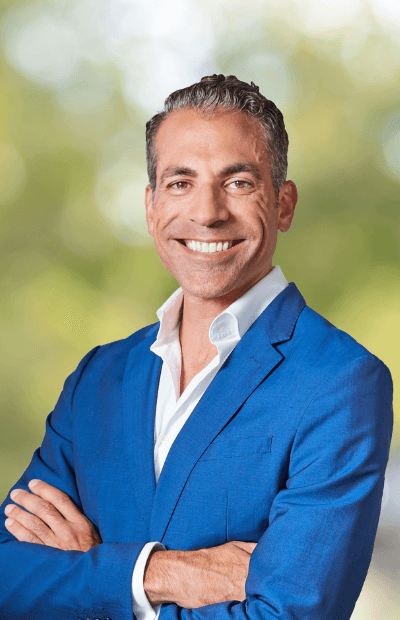
KEYNOTE SPEAKER | DR. VINCENT PEDRE
Gut-Brain Revolution: Rewire Your Mind and Mood Through Your Microbiome
Scroll below to watch session...
KEYNOTE SESSION | DR. VINCENT PEDRE
Gut-Brain Revolution: Rewire Your Mind and Mood Through Your Microbiome
3 Key Takeaways
The Gut as the Second Brain – How the gut microbiome influences mood, cognition, and mental health through the gut-brain axis, and why healing the gut can improve anxiety, depression, and focus.
Food as Medicine for Gut & Brain Health – The best (and worst) foods for a thriving gut microbiome and how they impact brain function, inflammation, and longevity.
Gut Reset for Optimal Health – Strategies to heal leaky gut, reduce inflammation, and support digestion through lifestyle changes, probiotics, and personalized nutrition.
[00:00:00] Welcome back to the future of personalized medicine summit. And I'm excited to have Dr. Vincent Pedre, the medical director of the Pedre integrative health. and founder of Dr. Pedre Wellness. He's the CEO and founder of Happy Gut Life. He's worked as a nutraceutical consultant and spokesperson for NatureMD and Orthomolecular Products and is a functional medicine certified practitioner with a concierge practice in New York City.
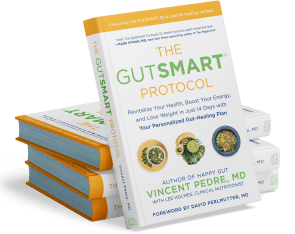
[00:00:41] Since 2004. As the best selling author of two books on the gut, he believes the gut is the gateway to excellent wellness. His latest book, The Gut Smart Protocol, featuring a 14 day personalized gut healing plan based on the gut smart quiz, is a culmination of years of research and clinical experience as a functional gut health expert.
[00:01:04] And his newest offering, Happy Gut Coffee, is a clean toxin free coffee That you can trust to keep your gut happy. Welcome Dr. Vince. And it's great to be here with you. Thank you so much. And that's my latest book, actually. My other book, which has sold over a hundred thousand copies, is Happy Gut.
[00:01:28] And this is the little baby that's followed it. It's still getting out into the world. But it's a very different style of book because it's a 14 day personalized gut healing plan. based on a quiz and the whole protocol is based on food, nutrition, as well as mindset and getting control over the vagus nerve and the parasympathetic nervous system.
[00:01:54] So it's applicable to everyone and anyone Anywhere in the world and actually the chef that I worked with is based in Australia. We had some really cool, like more international Recipes we wanted to have different styles and they'll appeal to different people. Yep, and I also wanted a book that could be applicable anywhere in the world because 890 million people worldwide suffer from IBS irritable bowel syndrome. And they really shouldn't, if they knew how to take care of their gut, you don't have to suffer from this condition.
[00:02:35] Me being one of those people who suffered a lot growing up from irritable bowel, and it wasn't until I got into functional medicine that I finally realized that what I thought was a lifelong sentence to having a gut that would Always not, give me trouble, sensitive stomach, never knowing if I went out to dinner, if I was going to be running to the bathroom afterwards, or just feeling sick, abdominal cramping.
[00:03:04] And being able to realize that doesn't, that is not my destiny, that it wasn't my fate. As much as I thought it was just like my makeup, and I think a lot of people who have chronic symptoms, they think that it's them. It's just, this is my fate. This is how my body is. There's nothing I can do.
[00:03:23] It can feel very disempowering, and you go to regular doctors, and they just throw medications at you to treat the symptoms, but they're never getting to the root cause. So then you think well, the only hope is that I'll treat the symptoms, but the symptoms are always going to come back So I'm always going to have this condition and it really conditions the way that people think about Illness within their bodies, right?
[00:03:50] And I think something that is so powerful about personalized medicine is Helping people realize that what illnesses, what disease your body carries is not your fate. You can actually change the course of what's happening inside of you by making the right choices. And those right choices are not necessarily taking medication.
[00:04:16] I'm not anti medication, but I do believe that the conversation has to be much broader than just the medication. We've got to think about lifestyle, food, supplements stress management. as a big part of what we do to optimize our health. One thing I'd like to start out with is I want everybody to understand that you went to medical school, like you're a real deal doctor who is integrative, meaning you went and learned the functional.
[00:04:47] And that's a very generic term nowadays. And people don't know what it means, essentially. Maybe I'll let you do that. I wanted to make sure everybody understand you are Dr. Vincent Pedre. You went to medical school, but then also then went on this path of learning how to reverse engineer illness from a root cause basis.
[00:05:09] Yeah, is there a better way to say what functional medicine is than that? I think you just said it like reverse engineer illness From the root from where it actually comes from right and I agree with you I've never liked the word the term functional medicine. No, I know nobody understands what it means?
[00:05:27] Unfortunately, the forefathers who decided that It's just a term that is stuck But, seriously functional medicine should be named something that just makes more sense, right? And it's really about treating the underlying root cause. And I am, yes, I did go to a regular medical school.
[00:05:52] Yeah, you're a D. O., correct? M. D., medical doctor. But they're both like, to me, they're very similar. I get it. There's really no major difference between an M. D. and a D. O., minus that D. O. 's get a bit more of the osteopathy part of it. But even before I went to medical school, I had discovered breathwork meditation and yoga.
[00:06:15] Before you launch into that, I wanna ask you, you talked about parasympathetic and sympathetic. I'm very familiar with that. Cause that's part of what we do here. We do autonomic nervous system training. Can you maybe give a 30 second primer to the audience on what it is and why it's important, especially toward gut health.
[00:06:36] Simple one sentence, you cannot heal a stressed out body. Perfect. You just, you cannot. So everybody out there who's trying to continue to live their lives in their stressed out fashion, and even their approaching their health in a stressed out fashion where. They're doing everything, but they're doing everything so rigidly and under so much pressure that everything has to be perfect.
[00:07:03] And they don't realize that actually is a detriment to their own healing process. Could I add a little bit to that? I would say, can I heal a stressed out and sleep deprived body? Yeah absolutely. And street lack of sleep is another stress on the body. And we know that having poor sleep has a downstream effect that increases anxiety, alters the gut microbiome.
[00:07:30] We increases inflammation, leaky gut. So grave foods we shouldn't eat. Yeah, exactly. Yeah. Sleep is one of the pillars that I work on very importantly with any patient that comes in with gut health issues. But going back to the parasympathetic sympathetic, there's actually a much more sophisticated way of talking about this and it's called polyvagal theory.
[00:07:58] And it's understanding that there's actually not just two branches. There is the sympathetic. And the parasympathetic, the fight or flight, or the rest and digest. But there's actually another branch, let's call it the shadow branch to the vagus nerve. It's the dorsal vagal branch. And this is the overwhelmed, shut down, withdrawn.
[00:08:20] Yep. And it's actually another survival mechanism that dates back ancestrally to reptiles. When a reptile gets stunned or attacked it like freezes. So this is a more primitive. But when humans get into this dorsal vagal response, what happens is you shut down, you get nauseous, you get dizzy, you don't want to get out of bed, you lose motivation.
[00:08:48] So it's associated with things like depression with a lot of gut disruption, even with constipation. When you get into what we call ventral vagal, which was what we've traditionally known as, and referred to as parasympathetic, the rest and digest, that's actually the ventral vagus, which is the more advanced mammal, mammalian branch of the vagus nerve.
[00:09:15] So from reptiles you never see a reptile cuddling its infants, right? Reptiles are born from eggs and they hatch and they're already ready to walk and, survive in the world. Whereas mammals. When we have our babies, they are very fragile. Must be nurtured. In order for, if you believe in evolution, in order to evolve from reptiles to mammals, we had to develop this ventral vagal branch that is all about nurturing, about safety, about security.
[00:09:49] And it's super important because it relates to some really fancy things that we look at in personalized medicine, like heart rate variability, and like what you were talking about, sleep and even just like ease of digestion, bowel movements, and that's what we traditionally think of when we're getting into a more parasympathetic state.
[00:10:09] What we're really doing is we're getting into ventral vagal state, which is the most, the balanced state, you want to balance between the sympathetic and the parasympathetics, meaning the ventral vagus, which is through breath work, through humming, through singing, through meditation, deep breathing, all of that helps to activate that ventral vagal pathway that controls things like the heart rate.
[00:10:35] And just helps improve circulation and everything in the body, including gut health, stimulates digestion, stimulates peristalsis, the rhythmic contractions of the intestines. And a lot of the patients that I see that are having disordered gut health, they're in constant fight or flight. We're living in a world where most people are actually shifted here.
[00:11:01] Some of them are back here. They're in dorsal vagal. They're withdrawn. They're like stunned and overwhelmed or they shift, they go back and forth between fight and flight or completely overwhelmed and frozen. Yeah. And so you need, so the thing is we can't take away the stress.
[00:11:20] What we can redefine our relationship with stress, how we relate to it, how do we react to it? And that's what you're talking about here because of breath work and some of these other things are proactive strategies that pull you temporarily out of sympathetic into that recovery mode. And the thing that I learned eight years ago when I started doing this, cause I've done 30, 40 minutes of breath work daily now for eight years.
[00:11:44] In addition to other things, you start to realize I can feel differently. And you also start to recognize, like for most people now, they don't recognize their ends flight or fright because it's it's all the time. But when you start going into parasympathetic and feeling the difference, now you understand when you're there and that makes you more aware to get back out of it.
[00:12:07] So how do people are split now because their body might be in fight or flight. But they are so desensitized to the stress that they live under that in their mind, they don't think they're in fight or flight, right? but their body is freaking out and it's showing up in symptoms like fatigue brain fog body aches visceral body fat Constipation.
[00:12:37] Yeah all of that Metabolic changes their body is freaking out, but they've become so Let's say maladapted to the stress that they don't even see it anymore. And that's part of what's, I think, the big challenge in our society right now as we're become more AI driven and more technological, is that as we become less human, in many ways, we actually need a movement to re humanize ourselves.
[00:13:15] And to remind ourselves of our own biological nature and the importance of connection to the body. And to that internal meter, like that internal awareness is so important. And that's, that really is the, like what, where I started, because I almost didn't go to medical school because I had a fear of needles and I would pass out every time I had my blood drawn or had a vaccine shot or whatever, and.
[00:13:44] That was the elephant in the room as I was in pre med, in college, and loving the science, loving all of the brainy stuff, but then started thinking wait a second this is soon to become practical, and part of that practical is that doctors deal with needles. And I don't like needles. So how am I going to take my love of science and my love of helping people and reconcile it with the big elephant in the room, which was that I don't like needles.
[00:14:18] Wow. How did you do that? And that's when I discovered breathwork and meditation. Yeah. So you were just hypersensitive in a tight string on a guitar. And as you did all of these practices, the string let up and now you weren't as sensitive, perhaps. I basically rewired my brain and how my brain reacted to external stressors.
[00:14:40] And that actually served me very well throughout medical school. So for the eight months before medical school, I had graduated early from college and I had eight months to just go back home to Miami. Not a bad place to call home. And I started, I'm, I've never been one that likes idle time.
[00:15:04] If I have idle time, I will find something productive to fill it with. And usually it has to do with something that I'm learning some way that I'm expanding. It just, I don't know. It's just the way that I'm built. So during that time, I was like, okay, I need to biohack my body. I wasn't using the word biohack, but basically what I was doing in early 1995 was figuring out how can I biohack My reaction to needles so that I don't pass out and I started learning about the fight or flight and the Parasympathetic and the autonomic nervous system and how it's on this automatic background And the question I asked myself is well, is there a way for me to get it under my control so that it's not Running renegade and making me pass out whenever I have a needle coming at me And that's when I discovered Dr. Herbert Benson's relaxation response. And I literally I started training as if, I was basically training to not pass out from a needle, doing breathwork and meditation, knocking myself in my room. This is 1995, and I'm 21 years old, so you can imagine no one's doing meditation, no one's talking about breathwork then, and this is pre internet pre, like, when yoga craze, all that I look back and I wish I had started something like a Calm app.
[00:16:33] I should have thought about that because it did have such a powerful impact on me that I went from this crazy stressed out type A pre med student that got into medical school with scholarship to a guy that when I walked into medical school, everybody would comment on how calm I was. And they started calling me the Zen guy.
[00:17:01] Sure. So take it back, Dr. Vincent, to now gut health. Why this is such a big precursor to that. Always, anybody who has gut health issues or IBS is going to have a very sensitive stomach, sensitive digestive system. They automatically put their stress here. You're feeling stressed, you lose your appetite, you have a knot in your stomach, you have to run to the bathroom with diarrhea because you're stressed about a presentation.
[00:17:34] So there's this very important gut brain connection that is through that nerve, the vagus nerve, and it's sending feedback in both directions. But actually most of the info is going up to the brain from the gut, telling the brain how the peripheral organs. And it's controlling actually the stress response in the brain by how the vagus nerve is firing and modulating the nervous activity in the brain through GABA through secreting GABA in the brain.
[00:18:07] And they've done studies where they've looked at what happens if you put people on a psychobiotic diet. Which is a diet that helps improve the makeup of the gut microbiome through fiber and fermented foods. And what that does to the stress response, because we're going back to we were talking about really, ultimately, it's, we can't get rid of the external stress.
[00:18:30] What you have to do is modulate the way you respond. To the stress. It turns out that it's not all you, that it's also being controlled by your gut microbiome. Yeah. And so what they found is they put it, they separated two groups. This was in Ireland. They put one group on. The Irish food pyramid, which I think the bottom of it is potatoes, and they put the other group on a high fiber, high fermented foods diet.
[00:19:00] Modulation and making sure they're not eating processed foods, reducing sugar, all that. Then they did a what they call this Cohen stress score, pre and post. After a four week diet, there was no therapy. There was no other intervention. Everybody was not on any sort of psychiatric medication for stress.
[00:19:21] No breathwork, nothing? No breathwork, nothing. So the only intervention was the diet. And two different diets. One was standard food pyramid, the other one was this emphasis on fiber and fermented foods. And what they found is that the group that was eating the higher fiber and fermented foods diet, which, which for anybody who's listening, fiber and fermented foods are gonna support the gut microbiome, and they're going to support the diversity of the gut microbiome, that through another study that was done in Stanford University, we found that it lowered 19 inflammatory markers.
[00:19:57] Just by improving diversity in the gut microbiome, it affected the rest of the body. Wow. So here they were looking at the gut brain connection, as well as gut diversity. So they found that the group that was eating more fiber and fermented foods, there was a, an increase in diversity. But what was really significant is that without any other intervention, just the diet, their self reported Cohen stress score for the diet group dropped by 37%.
[00:20:34] Wow, that's very significant. Yeah, that's a big number. And it was like the power of the study showed that this was a significant result. The placebo group dropped by half that. So maybe there was just some effect from knowing that you were in a study that was looking at response to stress. But the other group was double that and that says something that our gut microbiome is playing a role in how the brain perceives stress.
[00:21:04] And think about when you start stacking therapies like breathwork, with movement, with fasting, with your gut protocol, now you can start stacking 60, 70 Now, once you've stacked all these things together, now you're getting you're augmenting the results. And that is the thing that Americans need to change in their mentality is that there is no one magic bullet.
[00:21:28] No, yep. Yeah. Can I say real quick before I want to go into your process? Cause I want to make sure that we capture that before our time's up. One of the things that I've seen over and over with our clients at Tiger Medical in my own life is When you start to react to stress different, when you start to heal that microbiome and get those inflammatory markers down in your gut, and your stress starts to come down, what you can, what happens is when you get in a long term stress environment, you can't even see what, where you're at and what you need to change.
[00:22:03] And by, by going through this process, you actually create enough space where you actually can start making some real changes in your life. And maybe there's some things you got to get rid of that you couldn't see before. So working with somebody like you, doctor, is not just going to be the biophysical physiological improvement of the gut. It's going to have second, third, fourth order effects on your life.
[00:22:28] Absolutely, and the important thing for people to realize that are in this stressed out anxious state their health feels overwhelming. In that first month of working on things, when you're working, when I work with people and gut protocols, the first month is the month where it feels like you're not getting anywhere.
[00:22:54] It's basically the month where you're just you're investing and trusting. And you're following the protocols whatever it is, because I also personalize things to each patient. And, but what I do know is that once you get past that first month, things start to shift. Once you get to the six week mark, things start to look noticeably different.
[00:23:22] And I've done this over and of course I'm also data driven. So I like to do gut testing to look at different markers and it's going to be personalized to the person, but. Pretty much everybody who has a gut issue is going to get a gut stool PCR test with me. That's going to look at a bunch of different markers and that's going to help.
[00:23:41] That's only steering the ship. I already know which direction the ship needs to go. When I get the data, like the stool test labs, that's just refining the, the trajectory. So I know, okay, we're going to add this supplement. We're going to do. This thing. But it's that those first four weeks are so critical because what I find is that what people most need is someone that can tell them that yes, if you follow this, you're going to get better.
[00:24:12] You need to keep going, right? You got to keep going because in those four weeks to them, it can feel like nothing is shifting, but through my gut protocols and the things I've worked with patients right now, I'm working with a patient who's very anxious. Yes. I've gotten him to lower. He wasn't sleeping, but he was taking all these powerful sleep medications.
[00:24:38] He was taking three sleep medications We started working in about three months ago. Since then, we've taken one of those medications out, so now he's on two, and both of these we've now halved. So he's on half of the dose that he was on, sleeping better than he was on the three medications, working on gut health, anxiety is coming down, and I have another, I've had, There are multiple patients where I've taken them off of psychoactive medications like SSRIs.
[00:25:12] In a very controlled fashion you can't stop something suddenly, but I always build the foundation first so that I know that the gut brain axis is optimized because now we've really done a lot of gut maintenance and improved the gut microbiome. So I know that I'm changing and modulating the brain, the way that their brain is going to respond to stressors, anxiety improving mood, all of that.
[00:25:39] Knowing that, okay, now we're in a safe place where we can start dropping the medication because we've built a lot of the foundation. What so if somebody was interested in working with you, what kind of walk them through the process, take maybe take three or four minutes and explain your process.
[00:25:55] The first part, which is super important is our initial meeting anywhere between 90 minutes and two hours where I go through the entire history. I gather all of the details, I almost feel sometimes like a Sherlock Holmes and I'm looking at the little details that maybe to somebody else might be insignificant or maybe to other doctors, they just don't have the time to dive into it.
[00:26:21] But I like to dive into everything, including childhood, trauma, all the potential triggers. And then from that, I'm building almost a picture of the person. It's like they're giving me through the story, all these little puzzle pieces, and I'm putting them together. And then at the end, I'm deciding, okay, what blood work, what other functional tests do we need to do in order to fill in this picture?
[00:26:47] Because I already have a working hypothesis. I know what their issues are. So I like to go through and say, okay, what are your issues? Brain fog, bloating, constipation abdominal pain. I have low energy. So I like to always start with what are all the list of issues. And then at the end of the visit, I like to revisit those issues and then talk about what are our goals?
[00:27:11] Where is it that you want to see yourself? I want them to start visualizing the transformation of I want to have more energy. I don't want to be constipated. I don't want to be bloated anymore. And I really want to. Have the motivation and desire to travel, or, we start building the picture of what is it that they want.
[00:27:33] And I like to track all of this and make sure that I'm not losing sight of these things, because sometimes we have to start, maybe they have five main issues, but we need to start with two foundational ones. First, we do the testing, start putting them on a protocol. And then usually, depending on, I have like intensive programs where I do a 90 day deep dive with a patient and then I have longer programs and I have less intensive ones and it all depends on the person and what they need in the moment, they have more access to me through the intensive program and a lot of times people need to start with that 90 day intensive where I'm seeing them and basically coaching them through the process.
[00:28:19] Yeah. Every two weeks, so I'm working on I'm fusing a lot of my life experience. So bringing in my, my doctor side, right? Like the MD, but a lot of my experience with life coaching mindset, mental reframing like really teaching people the power of their words. Because a lot of times people don't know that when they've been chronically ill, they actually start to use a lot of negative self talk.
[00:28:55] And we've got to start reprogramming that. So I'm working at, whenever I work with people, I'm working at multiple levels, gut level, brain mindset, mental, emotional, even spiritual. Yeah, man, that's really cool. So this is going to involve stress management. You're going to work on their sleep. You're going to do testing.
[00:29:19] You're going to correct the microbiome and as those things synergize, that's when they're going to start feeling better. And then do you, it's almost when people go through the healing, it's almost like. Very slow sunrise where it looks like the level of light in the sky is not changing that much, minute to minute.
[00:29:42] And that's what it can feel like in the beginning. And then they start getting the first glimpses of feeling better. And then that augments and that augments. And then next thing like 90 days in, they can't recognize the person that started. Because they've gone through this incredible transformation.
[00:30:02] Now that's not everyone, some people need a longer healing arc, some people, the healing arc is six months. Some people are way more complex and they need a 12 month healing arc. Yeah, because they didn't get there over two years. It was decades, and so you can't fix it in a microwave.
[00:30:20] No, and we have such lack of patience in our culture. I was just reflecting today with a patient that, About a year ago, like I, I trained in yoga. When I was 29, I did a, or 30, I did a yoga teacher training. So I've been off and on doing yoga since I was 21, 30 years now, but there have been off periods where I've wanted more of the power lifting and weightlifting and all that.
[00:30:48] Sure. And towards the end of 2023, I had been doing too much lifting and not enough stretching. And my lower back started killing me. Yeah. So I shifted and I started fusing, like incorporating yoga back into my life once a week, maybe sometimes twice a week. And it's been over a year now, but even when it was, so I was 11 months in November of last year.
[00:31:19] And every time I went to a yoga class, I felt like I was starting from point zero I felt so tight, my hamstrings were tight, every time we stretched, it was so hard. And I was thinking to myself is this going to get better? Or am I always going to feel like I'm starting from the beginning? And then I started going twice a week, and something shifted, and now a little bit over a year in, I'm actually reclaiming the flexibility that I had, like, when I was back in my 20s and my 30s.
[00:31:54] Wow, that's not easy. But what it's reminded me and taught me is that, We often give up too soon. Yes. And we write something off because we think it's not working. And a lot of times it's not that it's not working is that it needed more time to work. And what was missing was the patience to do the boring thing, which is.
[00:32:18] Rinse and repeat, ordinary days. Yep. I, my own journey was I got my energy back and maybe the anxiousness gone quick, but it took me two years to fix my sleep and it took me 18 months to fix my gut because I was in such bad shape. I was on the pump inhibitors for 25 years.
[00:32:45] Wow. Which does a real number on your stomach and your gut biome. One of the worst things you can take long term. One of the worst. Yup. Yup. And but I stuck with it and now, it's, that was 19 when I first started this. So six years later, by this age, my dad had three heart attacks. It had cancer and I've had neither.
[00:33:05] And now I'm, I know I got work to do. I've learned some more things recently about microcapillary blockage through a vascular health test. And but it's exciting because I know stuff ahead of time. I know it's, when I was in, I was a bank, I was a corporate banker. I have an MBA for many years before I got into the health.
[00:33:27] I'm like in my third iteration. I was a banker, MBA type, and then I ran a pet retail chain. I started from scratch. Got out of that and now I'm in health. And the thing I always learned was making sure that where I knew where my cash wall was, and you don't ever run into that wall. Like you, you plan well ahead so that you can make good decisions, not stupid decisions at the end.
[00:33:51] And I'm just doing that same principle with my health is. Is, by going through a process, like what you're offering people, you're giving them a window into their future, because if things don't change, like if you're constantly in stress response, you're going to create a whole host of metabolic disease.
[00:34:09] There's a straight line to it. Dr. Bruce McEwen, he was a world renowned endocrinologist from New York University Medical School. He died in 18, but he talked about stress as cumulative. It has a cumulative effect on you. And and by, reversing that and correcting the gut, you're literally buying people years and years, potentially, of a health span, greater health span, meaning years you're not sick.
[00:34:35] And really, if you can flip the mentality, where you're not just going to the doctor to fix the acute issue or the chronic issue, Once you get past there, like start to really look into the future and well, what can I do now to optimize my health to feel as healthy as possible? Because you don't have any bandwidth for that.
[00:35:02] When you're dealing with putting out the fires that are inside your home. Same in your body. And our health system is built around acute care and sick care. It's really not your primary care doctor's fault. He's working within the system that, that financially works. And so if you want to, if you want to be proactive in America, you have to get your head around the idea.
[00:35:23] You have to invest in your health. Yeah. Dr. Vincent this has been great. I, how is it the gut smart quiz? How do people find you so that they can take the next step? I want to be really clear here. So nobody misses this. And they can find you the easiest way is my website, pedremd.com. Okay.
[00:35:46] So learn p e d r e md. com. That's to learn more about working directly with me. And then they can learn more about the other things that I do. My, my happy gut brand at happy gut life. com, including my gut friendly coffee that we launched. Earlier or actually late last year into this year. And I'm on Instagram at dr.
[00:36:13] Pedre, where I put a lot of free content for people. It's very expensive to work with me. It's free to go on my Instagram and get valuable information. Yeah. That's okay, though. You have to make the decision, invest with you or someone like you and maybe bypass something that you spend money on this year so that you can redefine your next two decades or three decades.
[00:36:40] Look I help give people back their lives. Yeah. And even though it's, it is an investment. People have to think about how much money they waste in losing the life that they don't want to live. They're lost. Yeah. And a patient yesterday reminded me. That she is in the best mental place that she's been in years and that I actually helped her come to terms with and be okay with retiring from her professorship.
[00:37:15] Wow. And now she's doing what she loves instead of doing what she thought she should do. That, that, I can't even tell you how big of a deal that is. Yeah, thank you. Thank you for being on with us. Dr. Vincent.
Thanks for having me. This is a, I love this summit and I think people are going to get a lot of amazing value from this and all the conversations you're having.
[00:37:43] Thank you.
About Dr. Vincent Pedre
DR. VINCENT PEDRE | SPEAKER
For over a decade Dr. Pedre, founder of Happy Gut Life, has devoted his career as a medical doctor to helping patients improve their well-being and quality of life by building the foundation of gut health that supports total physical and mental wellness. He believes that healing begins in the kitchen through the foods we eat.
His teachings, products, and gut-boosting programs have transformed the lives of hundreds of thousands of people, allowing them to regain the quality of life they were seeking. With them, he inspires people to make the changes that will have a lasting, positive impact on their health and the health of their community.
Dr. Pedre has been a leader in the gut space since the success of his first book. His latest book, The GutSMART Protocol, is the culmination of his 20+ years of clinical experience and research as a functional gut expert. And unlike most one-size-fits-all prescriptive health books on the market, this book offers a personalized plan for each reader by first having them take the GutSMART Quiz, finding out their GutSMART Score, then using it to individualize their choice of meal plans and foods they can either enjoy eating or should avoid. Through it, learn how true wellness is achieved by the power of the gut-body-mind-spirit connection.
🌐 Connect with Dr. Vincent Pedre
🔹 Website:https://happygutlife.com/
Don't miss out on our exclusive early bird offer. Enroll now for a huge saving of 30% off!