
KEYNOTE SESSION | STEVE ADAMS
The High-Performer’s Guide to Longevity: How to Optimize Energy, Focus, and Resilience for a Thriving Career and Life
Scroll below to watch session...

KEYNOTE SESSION | STEVE ADAMS
The High-Performer’s Guide to Longevity: How to Optimize Energy, Focus, and Resilience for a Thriving Career and Life
3 Key Takeaways
Your Health is Your Ultimate Asset—and It’s Likely Compromised Without You Realizing It
Preventive, Personalized Healthcare is the Future for High Performers
Transformation is Possible—But You Must Choose to Take Control
Greetings everyone. I want to deliver this keynote presentation and the title is called The High Performers Guide to Longevity. This is Steve Adams, founder and CEO of Tiger Medical Institute. It is my company that has put together this summit with the idea of bringing some of the smartest minds together to benefit you.
The audience the registrant who has said, this is important to me. So you took time out of your day, to register for this and time out of your life to either watch it live or to watch it partly live and upgrade and get the recordings. Hey, I just wanted you to know, I'm so thankful that you came. This means a lot.
This means a lot to me. So what I wanna do is get right into it and talk about how to optimize energy and focus and resilience for a thriving career and life, whatever you do. Okay? We're gonna talk about high Performance Health Hacks today. And there is a dilemma that high achievers have, and that is that we take care of everyone and everything first before we take care of our self.
We also are typically type A, we hate timeouts and we drive and we drive. And there's actually a law of diminishing returns as it relates to productivity that we can't defeat. We can do it for a while, but like my own story, I told in the Welcome where. I found myself at 50 years old, unable to sleep. I had terrible acid reflux. I had pain all over my body. I had no energy. I was exhausted. I had brain fog. I was losing my ability to produce. I felt like I was going down a rail, a train track, that the track was getting wider and wider on, and I was just trying to hang on, and I was having to work twice as hard to get the same amount done that I had maybe a decade earlier, and it was all because my physiology was systematically breaking down. And you cannot win this battle. You have to learn to become patient number one in your own life. And when you do everything and everyone around you gets better, not worse. So there is a shift that you need to make.
All right. All right. And so we're gonna talk about that and, we're gonna talk about how chronic stress and lack of sleep and poor habits basically sabotage the high achiever, and that is the dilemma. Okay, so we're gonna talk about three cores of three core pillars of high performance longevity, right?
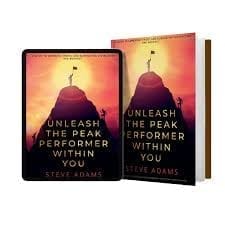
And the first one is energy optimization. The second one is cognitive mastery, and the third one is resilience and longevity. Okay, so hang on, we're gonna have some fun here. All right energy optimization, how to sustain peak performance daily. And when I wrote a book called Unleash the Peak Performer Within You.
I researched over 500 peer reviewed papers and cited, I believe over a hundred that are in the bibliography in the back of the book. So the book. It's a heavily researched document that you can trust on peak performance. And one of the key findings I found in Europe was it was a meta study where they basically, they made the assertion based on the literature that one cannot systematically perform at a high level or get into a flow state.
That state where we work and feel our best, where we're 500% more productive. You can't get in a flow state consistently if your physiology is compromised. And that is the high performer high achiever dilemma. By the time we arrive at the time of our life where we have the most wisdom and the most success under our belt we start to fall apart and.
One of the things we're gonna talk about in longevity is you can't die early. Okay? Think about Warren Buffett from the age of 65 when a lot of people say, you know what, I'm backing off I'm accepting aging, which you don't have to. And they're feeling like they can't attempt anything anymore, so they start closing up shop which is a signal by the way, of decay to your body, which will actually accelerate that.
Warren Buffet did. He's 93 years old. He's gone almost 30 more years past retirement age where he's been highly productive. Okay? And what has he been able to do in compounding his returns over 28 years? Okay, that's what we're talking about here. I want to give you that compound effect. All right? And so the first thing we gotta talk about is metabolic resilience.
All right? This the health of your heart, the health of your blood sugar regulation. Are you setting yourself up for a stroke by being hypertensive? Are you setting yourself up for cancer? The four horsemen that is Peter Attia talks about of metabolic health of chronic disease. All right? So we need to have metabolic resistance.
All right? And if you're gonna have that one of the first things we need to do is. We have to have good blood sugar regulation. All right? And so blood sugar or glucose is the primary source of energy for your body cells. Okay? We can also get into ketogenesis and burn fat. But this glucose source of energy is critical.
Okay? So the regulation of glucose levels is primarily managed by insulin. Insulin helps absorb the glucose from the bloodstream. Lowering blood sugar levels and then providing that immediate energy to yourselves. Okay. So it's critical that we manage this well. Cellular function requires energy from various functions including metabolism, growth, and repair.
That's why they require energy to be able to do those things. And then they convert this glucose into energy through a process called glycolysis. Okay. All right. And then now, we'll, I wanna add the mitochondrial function in. And this is cool 'cause this is like next generation science. The mitochondria are, or the little energy cells within the cells. Okay. They're the powerhouse of the cell and they're responsible for producing something called a TP. Which is the primary currency, the energy currency of the cell through oxidative phosphorylation. Phosphorylation, okay. It's a big word.
Mitochondrial health is crucial for effective energy production, so factors such as availability of oxygen. Nutrients like glucose and fatty acids, and the efficiency of electron transport chain. All impact a TP production. Okay. And generation. Here's the thing you wanna know, is that dysfunctional mitochondria can lead to reduced ATP production, increased oxidative stress, and ultimately contribute to fatigue and various metabolic disorders.
One thing I've learned from the tiger medical doctors who practice cellular based medicine. There's three pillars, there's three main pillars. There's more, but there is inflammation, oxidative stress, and the environment that the cell operates in. And you don't wanna do anything that causes any of those three things to go negative on you. And so this idea of metabolic resistance really is about your lifestyle habits. We're gonna come back to this over and over as we work through my keynote. If you want resilience metabolically you've gotta optimize for cardio health, for blood sugar regulation, for blood pressure. And you've gotta create this optimal environment with your immune system to prevent cancer.
Okay? And there's ways to do that. I don't have time to get into all of them. If you work with a doctor who does lifestyle proactive. Precision medicine, they all know how to do this, and can give you that set of protocols to give you that peace of mind, that you're doing everything you can to keep cancer at bay to keep diabetes at bay, to keep cognitive decline at bay, to keep your cardiovascular health at a peak and to regulate that blood pressure.
And our doctors at Tiger Medical can do all of this. Okay. The next thing is we wanna talk about is the role of nutrition and supplements. All right, so Dr. Matthew McNamee, who many of you heard from in this summit, he's our Chief Medical Officer at Tiger, talks about food as either medicine or poison. And that was probably the most important thing that helped me to finally make changes with food, because food is emotional, it's habitual. We use it as a, just we justify things we shouldn't eat based on little games we play emotionally and mentally. And so it's a really tough thing to overcome, to be consistent.
But what I found was when I learned that it's either poison or medicine, that was a game changer for me. And here's the bottom line is for most people I. We need to control the level of carbs that we're taking in, okay? Because when we have a high carb diet, we're setting ourselves up for glucose spikes and drops, and the people that perform the best have consistent energy all day. And if you wanna help your body regulate blood sugar better, and make that connection to your cellular energy and your mitochondrial so that you have full energy all the time. You're gonna wanna do some kind of ketogenic or Mediterranean diet where you're limiting the number of carbs every four hours and you're having a eating window of eight to maybe 10, 11 hours a day.
[00:10:26] And having, I'm on a program right now because of my genetic status that I'm gonna get into later and my mitochondrial dysfunction that I know about. I'm on a program where I only get 25 carbs in the first four hours of my eating window and 25 carbs in the second eight hours. I have an eight hour eating window and a 16 hour fast.
Okay. I don't always work that perfectly but the idea behind it is in addition to avoiding processed sugar, which I avoid it pretty much all the time, I have an occasional piece of cake or something at a birthday party. By and large on a day-to-day basis. I don't consume sugar. It's not in my coffee. It's not in my tea. It's not in anything. Okay. But also by limiting my carbs, I'm providing the environment for my glycemic index, which is the glucose up and down kind of measure to be steady all day. But I also eat a lot of healthy fats, and so I provide the body. The fuel so that I can burn fat also.
Now, me, I'm a thin guy, I don't need to lose weight doing this, but it gives me consistent energy throughout the day. And so nutrition can play a key role in helping you regulate that energy level every day. It can optimize your metabolic health and solve for those four horsemen that we talked about earlier.
Okay, so very important supplements. I own a organic grocery store and supplement store, so I sell them, okay, first of all, you should not be taking supplements unless you are under the care of a physician, especially one that does lifestyle medicine. Because let me guess, most of you're really smart. You know how to do your research. You go listen to Ben Greenfield or Dave Asprey and what can happen when you do that? Huberman, you name it. You grab something from here, grab something from there, read this article, research this, and a year later you're taking 17 supplements and you don't really know if they're doing what you need them to do.
[00:12:35] And the main criticism I have of thought leaders is, while I don't think it's intentional, it can give the idea that, Hey, take this 'cause it's good for everybody. That is not true. What I have learned in the last five, six years. Doing epigenetic precision medicine is that there are people that should take things and people who shouldn't, and there's no way you know that unless you know your genetic blueprint.
[00:13:01] Supplements number one, need to be guaranteed minimum potency. So look for a certification of GMP on there. Spend 10 or 20 or 30% more and buy them in a reputable local. Health food store. That's what I'm gonna tell you. Stop buying stuff online. Stop buying stuff that's GMP only, or make sure it's GMP when you buy it online. But support that local store where you get knowledgeable help, number one. Number two, you gotta have a physician understanding what you're taking. Because, and make sure, because there may be contraindications with some prescriptions you're taking, alright? Or you may not need it. Or after testing you may be accumulating toxic levels of things like vitamin A or vitamin D.
So one must get under the care of a physician. Now, the reason we need supplements, you'll hear other clinicians bad mouth them, but the problem is. Our food system, our farming system prevents food from giving you everything you need unless you eat a perfect diet. Sleep is key because I heard this quote from one of our guests in the summit. He said, A stressed out and sleep deprived body cannot be healed. Let me say that again. A stressed and sleep deprived body cannot be healed. All right, core practice. You've gotta get your sleep and your stress management under control. These are my next two points under the energy optimization pillar.
Sleep. You should be in bed eight hours a night in bed, and you should have an aura ring. That's my preference. I'm just gonna say it. Get an ordering. All right. And. I'm not gonna be politically correct here. Alright? A lot of the other stuff's out there. I'm telling you the aura rings the best because it gives you the architecture of your sleep.
You need to understand how long are you in deep sleep? How long are you in rem? How long are you actually asleep, okay? Because you need six and a half hours of actual sleep time per night to get the requisite cycles that you need. And so most people need about eight hours in bed to get six and a half hours of sleep. It'll also tell you a really good, accurate measure of your heart rate variability, which we'll get into in a minute. And it also tells you your oat, your oxygen saturation levels. Because if they're not good, then we need to go looking for sleep apnea and obstruction issues and get that corrected cause it'll, until you do that, nothing's gonna work with any doctor. So sleep is an ultimate performance enhancer. The other thing I can tell you about sleep is you need to have a routine when you go to bed. There needs to be a routine. There needs to be a routine about when you wake up, and they need to be similar seven days a week, okay?
If you wanna be average and get part-time results, do it part-time. If you wanna be world-class like I think most of you do, then you gotta do it full time. All right? So that means you've got to, do this seven days a week. I get up at the same time, seven days a week. I go to bed seven days a week. Obviously there are exceptions. When we go out, we go on vacation, whatever. All right. This leads me to my fourth point under this first heading, this first pillar, and that is stress and cortisol management. The best thing I can tell you is that we have a branch of our central nervous system called the autonomic nervous system, and this branch regulates things like your breathing, your eye dilation, whether you're, whether you get goosebumps or not, your body temperature all kinds of things are going on under the surface that you don't think about. This is also where your stress response is. Stress response is good when you have a real and present danger.
Unfortunately, our body cannot tell the difference between you worrying about a deadline and. A bus about to hit you, your body goes into the same reaction. And the problem is, in our modern lifestyle, we are in it 24 7 and most of you don't even realize it, you've adapted to it. So you need to develop the practice of optimizing your heart rate variability. And you do that through deep diaphragmatic breathing. I'm gonna give you one approach that works universally with people. The only caution I have is people that have AFib. You need to get that under control because if you do this type of breathing, it can actually trigger an AFib event. Okay, so that's one warning is breathing through the nose for three to four seconds. Brief pause and then exhale through your mouth with your lips pursed so you can control your breath. And exhale, six to eight seconds. The elongation of your exhale is what engages your vagal nerve and it pulls you out of the stress response and pulls you into recovery and rest and digest.
Okay? That's all you need to know. If you do that, your HRV will improve. Okay? If you wanna learn more about HRV, go research it. Look on the Tiger Medical website. We have the articles about it. But you have to disarm your stress response. Notice I didn't say lower stress. You can't do that. Life comes at you in a highly variable way. There are stressors, so what we can do is change how we react to it by going proactively two to three times a day into a diaphragmatic breathing session so that we can manage our stress levels and recover from it. Now you'll start to feel the difference and know when you are stressed and actually proactively on demand.
Get yourself out of this response, and when you do this consistently over time and improve your sleep, your cortisol profile will lower and improve. And remember, when people that are high achievers, middle aged, they typically have high cortisol profiles, which causes visceral body fat to retain in the center.
It causes you not to sleep. It causes metabolic disease and and it ruins your mental clarity and your energy. So we wanna get control of it. All right, let's talk about, so that's energy optimization. Now let's talk about cognitive mastery. Alright, so brain fog is something that is very common among people who are over 40, who are big achievers.
All right? And it basically is a term used to describe a range of cognitive impairments, including some level of confusion, maybe the inability to focus forgetfulness, or just the lack of mental clarity. And it's really from just this huge cognitive load that you're carrying. You're overloaded, you're overwhelmed. And, and there are several root causes. One is sleep disorders. If you're not sleeping well, this is gonna be a big issue. And I had this issue and I've overcome it completely. Another one is nutritional deficiencies. And the only way you know this is if you get tested more about that later. Chronic unmanaged unmitigated stress.
I just talked about how to do it. If you've never done that before, stress that is nonstop is gonna cause brain fog eventually. Dehydration. If you're not getting 80 to 90 ounces of water a day, you're gonna be chronically dehydrated at a low level, and it's gonna affect your brain's ability to do its job. Also hormones. If your perimenopausal is a female or menopausal, that's gonna provide a pro, that's gonna be a contributor to this. If you're pregnant as a lady or if you have thyroid dysfunction. And it's really on the rise because of metabolic disorder is leading to more and more autoimmune disorder, which is also leading to thyroid disorder.
And these are all silent killers of productivity and decision making. Okay. What we wanna do is we wanna optimize the environment inside of our brain, okay? And these, now when I start to get into these kind of things, they're gonna be repetitive, all right? And every habit that I'm gonna talk about in this talk are things that many of our speakers train.
We train at Tiger Medical, we actually have a course on it called the Tiger Eight Health Habits that are accessible for people that work with us. And I'm gonna come out with an exciting new low cost product that anybody can afford, that you can at least get these habits, get this training and get a regular contact from me or one of our team members about how to implement one of these. But one of the first ones is really improving your. Fuel you put in your body. This is gonna help you optimize your cognitive function. It's gonna optimize the neurotransmitters, things like tonin dopamine. All right? Gaba they're all important and they need certain amino acids to produce. Okay?
The other thing is regular exercise. All right? Look, when we do 20 to 25 minutes. Now I'm on a longer protocol because some other issues I have. But if you can get in 20, 25 minutes a day of sweating of cardiovascular, obviously get with your doctor first before you do this, especially the older you are, the more you are at risk for cardiovascular disease or if you're already in it, you have got to talk to your physician before you engage in cardio. Okay? Please hear me there. Okay? I'm not just covering my butt legally here I am very concerned for you because you're a high achiever. You just go do stuff, get with a doctor first. Okay? But when you do that 20 to 25 minutes a day, you cause something called BDNF, brain derived neurotrophic factor.
It's like miracle grow for your brain. It's called neurogenesis. New brain cells are created. There are growth factors in your cardiovascular system that are released. There are factors in the blood sugar regulation mechanism that are released all from exercise that optimize these growth factors and will improve serotonin, endorphins, dopamine, reduce stress, help you get rid of it. Okay? So that's one thing. Another thing is sleep. Hear it again. Okay. Sleep deprived body is on a downward path to sickness. That's all I can say. If you want to want, if you wanna master and get rid of mental issues and problems with your ability to focus, you've gotta sleep well.
Stress management's another one. We've covered that. But one here that's not talked about is social connections. And I'll tell you type a high achievers, we can't operate in life in a vacuum. If you're a person of faith, be in a community group where you're not in charge. Okay? If you're not a person of faith in that regard, that classic term, just make sure you've got strong social bonds, that you're in some kind of a group that just edifies and encourages you where you can go and offload things, okay?
In a safe environment. All right, so social. What I'm gonna tell you is limit the caffeine and the alcohol. Okay? You, I try to cut it out by 10 in the morning 'cause it has a pretty long half life and it'll affect your sleep. Okay? And alcohol, just tell you, I love a glass of wine. I used to love beer. I've pretty much given it all up because it just literally, every time I have even one drink, it destroys my sleep for the night. I have the data to prove it with my aura ring. And the other thing is sunlight exposure, getting out in the morning or using A-A-A-A-A, a blue light therapy.
You can get 'em on Amazon. Phillips has one if you're in a northern environment in the winter where you don't see the sun much. And I lived in Michigan most of my life now. I live in Texas. I get a lot of sun naturally here, but in Michigan, I didn't get it for five months. You need a blue light where it can you can let it wash over your face for 30 minutes every morning while you're eating breakfast and doing something and then doing some meditation.
hese are all things that are gonna improve and, really get after and improve your ability to optimize. The inner terrain of your brain so that you perform well. Okay? And then the last thing I would say is embrace and harness the power of flow. Okay? If you really wanna learn how to do that, I would encourage you to go to Amazon and get my book, unleash the Peak Performer Within You.
It is a manual on how to implement flow in your life, and it has all these health habits I've been talking about as well. It was the science it was the scientific basis from which Tiger Medical came from. Okay. I started out in just the peak performance business and moved into the medical business when I realized that unless we got the body nothing else was happening. Okay? But really flow, it requires some things. One is you've gotta optimize your physiology, which we're talking about here. You gotta optimize your psychology. I'll let you read the book. I'm not gonna go into it now. And you've gotta engineer your day for flow. And basically what you gotta do is get set up your day in a way through goal stacking.
And planning so that you've got two to three blocks of 90 minutes a day where you work on one thing that's advancing your vision forward. And when you can focus for 90 minutes on one thing like that is flow. It's not mystical, it's just the ability to get there and stay there. But what I'll tell you is it's biologically expensive.
It's exhausting. Okay? So we gotta be our best to do it. But if you wanna master the cognitive side. Performance flow state and learning how to live a high flow lifestyle. And everything I've said in this section is in that book. Okay beyond this video, you can get it from there. All right. Now let's talk about the third pillar here called resilience and longevity.
The long-term health plan for high achievers. So I said to you earlier that time wins. I use the example of Warren Buffett. If you're 50 right now and you're overweight and you have no energy and you're not sleeping well, let me just tell you, your chances of getting to 93 like Warren Buffett aren't good. Okay? The statistics are overall you're gonna be fortunate if you get to 77 for men, and I think 80 for women. So start looking at that and ask yourself, if nothing changes, take that to the end degree. What's gonna happen? You're probably gonna have 15 years of chronic disease. And chronic disease is a huge form of interference for you to achieve your goals.
Okay? I love this thing, the performance formula, which is. Performance equals your skill and your wisdom minus interference. Interference is things like a poor mindset, poor habits, poor use of your time, and a sick body. Okay? So you wanna eliminate those interference things so that your skills and your wisdom take over.
And so if you wanna have peak performance. And really achieve the big things in your life you wanna do. You can't die early. Okay, bottom line. I'm not trying to be blunt, but I am. Alright. There is power in compounding. And here's the thing, I'm 61 and I have more experience and more wisdom, more emotional regulation than I've had at any point in my life. And I've made a lot of dumb mistakes, made a lot of people mad. Negatively impacted a lot of relationships in my life to get to the point today where I don't do those things anymore. It's been painful and I'm sure every one of you have similar stories. I want to, I, my goal is to live to 95 to a hundred years old, be productive all the way through my eighties.
I'm doing the things I need to do to improve, to stack the odds in my favor that I get that additional 28, 29, 30 years. To compound everything I've learned in my life up to this point. Okay? So not only can I do a far better job with the nonprofit microloan organization that I've been doing for 20 years all over the world of traveled to 44 nations doing this, I want to keep doing that. Not 44 nations doing this. I've been to 44 nations, many doing this. I wanna keep doing that. It has a huge impact. I have a grandchild and a new one on the way. I wanna be an influence in their lives all the way through them growing up and getting married. I have an amazing spouse that I wanna be with for another 30 years to enjoy life and go places in this world.
And I wanna do this with Tiger Medical and with our, my other company I'm involved in called Genesis Health Sciences. That. Is helping people discover their microvascular health. And I've got this organic grocery store providing really great products to people locally. If I die early, a lot of that stops and I want the time to do it.
That's my why, and I want you to start learning that as well. Okay. And all right, what do we need to do? All right number one, we have to do early detection. You can't just guess. You can't listen to podcasts alone. You've gotta get with a clinician who orders tests that your primary can't or won't.
And so you need an advanced lipid panel. You need an advanced blood sugar regulation panel that doesn't just look at glucose, resting glucose, but it looks at your insulin resistance numbers. Okay? You need to look at. The actual size of your cholesterol clusters. Okay. There's so much more in there I'm not qualified to talk about.
From a genetic standpoint, you wanna understand what your A POE four status. This is the gene that is predictive of cognitive disease because it has huge downstream effects on your, precision health plan on what kind of food you can eat, how you exercise everything. 'cause you could be doing it wrong in feeding this genetic marker and cause it to turn on to express.
Okay? So you need to know this. You need to know if you have the M-T-H-F-R gene in which variants you have. Okay? Up to 52% of the population have this gene, which means that you don't methylate well. Which means you don't detox what as well as others, which means you are at higher elevated risk for cancer.
Okay, I have it. Alright. I am on a protocol because I have it. Alright. It's also caused me to have greater, more accelerated mitochondrial dysfunction and I'm on a plan to treat that as well. Alright, so we need to know these things and we need to know our cardio, inflammation, genetics and other cardio genetic pa pathways.
When the doctor has this, and then they can overlay your current labs, looking at things like blood work, looking at toxin burden, looking at gut health. We've talked a lot in the summer about gut health looking at micronutrients and hormone health. When you overlay all of those inputs over genetics, it's like 3D precision medicine.
If you wanna do what Warren Duff Buffett has done, what I'm attempting to do, you've gotta go to that level. And for some of you, I realize you may not have the budget, but you can do it over time. Okay? Very important to do that. Now I wanna talk to you then, how, okay, we have all this information. How do we age well?
How do we expand our. Health span, which is the number of years we're healthy. How do we flatten that curve of aging and do that better? We must get baseline testing. All right? And after this event, my company's gonna offer you a great deal on an advanced panel that you can get started with one thing and find out some basic information that is beyond what your primary can do.
That's one thing you can do. Okay. Then you can find out what your risk factors are, and now you can explore what does it look like to work with a physician one-on-one to get an epigenetic, precision proactive lifestyle medicine program going for you that allows you to now proactively take care of problems before they become acute. Because when they become acute, your options shrink fast. And they get a lot more expensive. If you're old enough. You remember the old Purolator oil filter ads that said, pay me now or pay me later. This is truly true of that. Okay. So we wanna do that. The other thing is you wanna build into your life a set of routine practices that will build up and stack on each other and literally transform your health over time just from the practices alone. Okay? So for some of you who have no budget for any of this, we're gonna offer you something for Netflix money that is going to give you access to the habits that have been researched and proven that if you implement them in your life.
You will heal yourself from within. I'm not gonna say that you shouldn't go to the doctor eventually when you do have the budget, but if you just don't have the budget, I'm gonna encourage you to look at that. But if you do have the resources, do it now. Become patient number one. If you have money like that, then you should invest in this because if you lose your health, all that work you did all of your life, you're not gonna enjoy it.
Others will. And so I wanna make sure you understand that. Alright let's talk about personalized health strategies. When you go to the physician, the primary care physician, that doctor is there for you when you're sick, that's the system they're in. That doesn't make them bad people. They're very, they're brilliant, they care about you, but the system is built for when you're sick.
All right? So if you wanna change that narrative and get after it before you're sick. You must become a health investor instead of a healthcare consumer. Okay? A health investor does it proactively. They expect a return. A healthcare consumer is just trying to get over being sick. All right? Secondly, you gotta prioritize the cash to change your life, okay? Cut something else out so that you can invest in this. Now, for most people, one year, investing in this gives them the education and the data points from the testing. That can really serve them for the rest of their life with a lot less cash investment in the future. Okay? Work with a doctor that knows how to do this.
Many of the people you listen on this summit know how to do this. My Tiger Medical doctors can do everything I'm talking about here. Okay? Walk through a trusted process that is organized to pull you through. This is really tough to do on your own. Okay? Get help doing this. Then build new lifestyle habits.
Alright habits plus stepping into a scientific process guided by a physician is going to give you the facts that you need to change the narrative on aging for you. Okay. So what are some actionable steps? Obviously one of 'em is you've been on this summit, I think the next thing, what I want you to consider is investing in that first level test that's inexpensive that can give you some data points.
You'll meet with me or one of my team members and we'll go through results with you and help you understand what your opportunities are. Okay? I will be very quick to tell you if we're not the best fit. Okay? I care about you first. I. That is a, an educational call, not a sales call. Okay. The, the next thing is once you get that data is look at how can I start to become proactive, okay. In this space for me, how can I start to implement habits? Okay? Like I said, some of you, it might be invest in a low cost membership with us so that you get the habits and you get the training in the habits, and you do it yourself. For others who have the resources, it'll be look at a customized plan to help you take that next step and correct things.
Get that year under your belt and be your own best health coach from there forward. Okay. So those are the options you have. And then obviously there's others that you've been listening to that you may have resonated with more follow up, like we gave you the way to take action with them as well.
Okay. What I'll tell you is this there's this old saying, it says, the man who has his health has a thousand dreams. The man who is sick has only one, and that's to get better. Okay? I don't want that for you. I want you to have a thousand dreams. So I want you to optimize, and I want you to go on this journey with me.
So thank you for being on this summit. Thank you for watching my keynote today. My big thing is take action. Whatever you do, take a step forward. You'll learn a little bit more from us after the summit, how to do that very specifically. And then you've got other options as well that you've heard from.
So thank you so much.
About Steve Adams
STEVE ADAMS | HOST
I am thrilled to invite you to a transformative event dedicated to the future of health, longevity, and high performance. The Future of Personalized Medicine Summit brings together leading experts in functional medicine, cutting-edge diagnostics, and proactive healthcare strategies to help you take control of your well-being.
Our carefully curated lineup of speakers and sessions is designed to inspire, educate, and empower you with science-backed insights to optimize energy, enhance mental clarity, and extend longevity. Whether you’re a high-achieving professional looking to maximize performance or someone seeking a more personalized approach to health, this summit is your gateway to a future of vitality and resilience.
Join us as we redefine healthcare—because your best health starts now.
🌐 Connect with Steve Adams
🔹 Website:https://www.tigermi.com/
Don't miss out on our exclusive early bird offer. Enroll now for a huge saving of 30% off!