
SPEAKER | MATT ZEMON
Psychedelics Are Catalysts Not Cures
Scroll below to watch session...

SPEAKER | MATT ZEMON
Psychedelics Are Catalysts Not Cures
3 Key Takeaways
Psychedelics as Catalysts for Self-Discovery: Explore how psychedelics, like psilocybin and MDMA, can break through repetitive thought patterns, enhance emotional breakthroughs, and help individuals discover new perspectives on their lives and traumas—serving as tools for profound self-exploration, not cures.
Personal and Collective Healing: The speaker shares how psychedelics, when used responsibly, can offer emotional relief and healing for diverse groups, including veterans with PTSD and terminally ill patients, enabling meaningful personal growth and facilitating group transformations.
Integration and Meaning-Making: Emphasizing that psychedelics provide insight but require thoughtful integration, the talk highlights the importance of using these experiences to rewrite personal stories and find deeper meaning, rather than simply seeking a quick fix or cure.
[00:00:00] Hi everyone, Steve here from Tiger Medical and the Future of Personalized Medicine Summit continues with Matt Zemon. And listen, this guy is something else. He's the author of three bestselling books, uh, the psychedelics, psychedelics for everyone beyond the trip and the veterans guide to psychedelics. Matt holds a master's degree from King's College, London, and specializes in the impact of psychedelics and mental health, focusing on their potential to catalyze Profound personal transformation before his own transformative experiences.
Matt's entrepreneurial background laid the groundwork for his current mission to broaden understanding and access to these transformative substances. As a seasoned public
[00:01:00] speaker, Matt has shared insights on national public radio, ABC, NBC, CBS, Fox, and has been featured in over 75 podcasts discussions resulting in almost 1 million downloads.
His speaking engagements span major psychedelic conferences, such as Psychedelic Science, Wonderland, and Meet Delic. He's also delivered keynotes and talks at prestigious institutions and organizations, including Entrepreneurs Organization, MIT, Duke. University of Richmond and mental health marketing is diverse speaking experiences showcases his ability to engage a variety of audiences across multiple platforms.
Most recently, Matt was engaged to be talking, taking the stage at TEDx Randburg in South Africa on October 25th. To talk about the transformative potential of psychedelics and healing mental health challenges like PTSD, anxiety and depression. Um, [00:02:00] well, that's pretty impressive, Matt. Thank you for coming on to the summit.
I'm really thankful you're here. Steve's so grateful that you chose this topic as part of the summit. Yes, absolutely. We, you know, um, my company, we've been around for about seven years and the vast majority of the people that come to us have some challenge with mental health in some way. And, um, you know, my goal with Tiger Medical and with the summit is I'm trying to expand the knowledge set that people have of the tools that are available.
And so, yeah, yours fits perfectly right in there. You know, before we dive in, I'd love for you to share a little bit about your background, uh, Matt, um, you know, what led you to specialize in this topic? Um, and kind of just, you know, start us out there. Yeah. I mean, to do this, I'm gonna have to go back in time a little bit.
I was 22 when my mom died, Steve, and, uh, she was just 49. Um, [00:03:00] when this happened, I felt like a, I don't know, like a part of my heart had been torn away and it left this. This deep emptiness and fast forward more than 20 years. Some friends invited me to participate in a, uh, a guided magic mushroom journey.
And I'm a responsible person. I'm a business owner, a parent, a spouse, a high performer, much what I imagine your typical, um, listener is. And a psychedelic journey was not the kind of thing that fit into my world. Yet something inside of me said, yes. Um, and what happened next was beyond anything I could have imagined.
Um, I had melted into the earth. And everything around me, the ground, the sky, the trees, it felt alive and connected. And for the first time in forever, I felt unconditionally loved. And then my mom was there and I could feel her and it was like I could pull a string from her to me to my children and I could see that we were all carrying each other forward.
And I came out of this experience and I wondered, what the hell was that? And I knew I had to learn [00:04:00] more, so I went back to school to study psychedelic medicine and I traveled the world working with respected practitioners of people like Titus and Shamans and also doctors and researchers. Mm-hmm . Mm-hmm
Wow. Was there a, um, and I'm gonna rephrase it and I thought here, . Yeah. Yeah. There's so much I want to talk about. Um. You know, given, you know, all of your experience with this, um, why do you believe psychedelics are such a crucial aspect of optimizing health, particularly with high performers? Cause you're right.
That's who we're going to attract to the summit is going to be people that are looking for that last 1%. So talk to us about that, man. Yeah, so I believe psychedelics, both in the medical and the spiritual context, are crucial for optimizing health, especially for, like, high performing professionals, because these individuals, they often operate in high [00:05:00] pressure environments that demand intense focus.
focus and quick decision making and sustained performance. Um, and over time, things like chronic stress, unresolved, emotional patterns, disconnection from purpose, all those things erode not only their mental health, but their capacity for, uh, creativity for resilience, for authentic leadership. So psychedelics when approached with intention and preparation and proper integration offers a unique and powerful pathway to address these challenges. So on the medical side, psychedelic assisted therapies have shown remarkable success in helping individuals with, with treatment resistant PTSD, with depression, with anxiety conditions that can quietly impair even the most successful professionals.
And research has demonstrated that psychedelics like psilocybin, which is the active ingredient in those magic mushrooms I was talking about a minute ago, MDMA and [00:06:00] ketamine can create neuroplasticity, which helps the brain form new, healthier patterns of thought and behavior. Now from a spiritual perspective, psychedelics, or in this case, I'll call them entheogens, have long been used in sacred contexts to foster a sense of interconnectedness, uh, of purpose, of inner clarity.
So high performing professionals often become disconnected from these. deeper aspects of themselves because they're focused solely on external success and on providing stress response. Absolutely. Yeah. And psychedelics give us a chance to recalibrate an opportunity to step outside the, uh, the relentless mental chatter.
and reconnect with, with our core values, our passions, our, our vision for, for life and work. So when medical and spiritual dimensions are combined with personalized approaches, [00:07:00] tailored to the individual's psychological history and physiological profile and life circumstances, Well, psychedelics then become more than just a tool for healing, they become a catalyst for sustainable well being and high performance.
So in an era where burnout is rampant and mental health challenges are on the rise, this kind of individualized holistic intervention, it's not just valuable, it's essential. So one of the things I'm pretty passionate about is organizing your life in such a way that you can operate and flow quite a bit, not just occasionally by accident, but that you can actually engineer flow.
And, um, I started on that journey seven, eight years ago, learning from Steven Kotler and others about flow flow states. And it actually led me into the medical space and why I'm in tiger medical because. In my research, I wrote a book called Unleash the Peak Performer Within You, and it's a book [00:08:00] about how to construct a high flow lifestyle.
And, uh, one of the things that really stood out to me was that, um, a couple things. One was if you're physiologically compromised, if your health is not good, it is impossible to get into flow. And, and, and the other thing was, is that there's such a rampant, uh, out of control. chronic stress that you just spoke about, um, among people who are trying to perform well, which, you know, comes from this ruminating in the past and worrying about the future.
And we know from flow, we're 500 percent more productive. We learn like 400 percent faster. We're like 450 percent more creative. How can someone utilize what you do to help them achieve, you know, flow at a more, uh, consistent way. Yeah, I love that. I mean, I love [00:09:00] both recognizing that when we are ruminating on the past and thinking about the future, we aren't here in the present.
And, um, and I know what that feels like for me, for my family, for my kids, for my wife, for my friends. Um, It's easy to fall back into. So easy. And then that's, I mean, that's, that's the practice. I mean, people, people talk to me about psychedelics all the time. They're like, Oh, he's just going to talk about psychedelics all the time.
Uh, really not. We, psychedelics are kind of the entryway to a conversation, but we use psychedelics to give us these insights, these awakenings, these awarenesses. Um, but the practice is how do we then move through the rest of our lives? And every other day, remembering. What we had forgotten and being more awake, more aware and, uh, and bring in more present in what we're doing.
And I think with that, um, with that alignment between who I am and what I'm doing, um, when that is [00:10:00] aligned, it's much easier to get into flow because you're operating in all cylinders. And you're in the present, you're in the now, which is crucial. So what are some of the biggest misconceptions, you know, our fears that people have about, uh, psychedelics?
There, there are several, um, misconceptions when it comes to psychedelics, both in medical and spiritual context. So one is the, I think one of the biggest is the belief that psychedelics are inherently dangerous or they're only associated with, uh, reckless or recreational use. And while there's going to burning man or something, it's a, it's a, it's a party, it's a festival.
It's, it's for, for young kids doing whatever. Um, and while there, there are certainly. Risks if the substances are misused when they're administered in safe, supportive, and intentional settings. And that can be clinical with trained professionals or in a [00:11:00] spiritually guided context. Psychedelics can be profoundly healing and transformative.
So research consistently shows that the potential to treat PTSD, depression, anxiety, addiction, um, these medicines succeed where conventional therapies have failed. So then the next misconception would be, well, this is a quick fix. Well, kind of. In reality, the medicine itself is only a part of the process.
So I say all the time that psychedelics aren't cures for anything. They are, they're catalysts, um, not cures. So because of that, there's a period of preparation. Why are you doing this medicine? Are you, do you have a clear intention? Do you know what you're getting into? And then there's the integration piece.
That's essential. Um, so psychedelics, they could provide powerful insights, um, emotional breakthroughs, but without thoughtful integration, the potential for lasting change diminishes. So it's like opening a door to a new [00:12:00] perspective, but what happens afterwards, the work you do to walk through that door and apply those insights.
That's where the real transformation occurs. You know, there's, there's also a, a misconception about, um, that these experiences are about visual hallucinations or abstract kind of esoteric insights that don't apply to high performers. And while altered or alternative states can certainly involve vivid imagery or, or novel perceptions, um, the real impact comes through the deeply personal and emotional nature of the experience.
So psychedelics have a way of helping individuals, um, access repressed emotions or unresolved traumas, and even a renewed sense of purpose or interconnectedness, which again, brings us back to flow. You get those things and you can get into flow easier. Um, and then I think finally. Many high performing professionals assume that engaging with
[00:13:00] psychedelics will somehow dull their edge or compromise their drive.
And in reality, many that I've worked with report the opposite. Um, Psychedelics, when used responsibly, can help people release chronic stress, gain clarity on their goals, reconnect with that intrinsic motivation. And people often find themselves more creative, more present, more in tune with their own.
Well, that's fantastic. And, you know, I've learned in my own journey, uh, I used to be uber intense and, um, uh, you know, I, I had the privilege of building a company that scaled to nine figures in revenue from scratch, uh, But the last few years I was pretty unhealthy and that's kind of what led me getting out of that and selling it and doing what I do now.
And, uh, that I had that same thought, like if I de stress and get centered and calm, I'm [00:14:00] not the guy who did what I did the last 21 years. Couldn't be further from the truth. I'm actually much more productive than I was in that last endeavor, uh, because of that centering. So I appreciate that you identified that.
Um, talk about, uh, well, and the other thing I really like what I'm hearing, this isn't go out and buy this substance from some dude in the street, you know, you're talking about a guided process where you're helping people even know why they're doing it, you're helping prepare them to do it, and then you're making sure they're in a place where they can do it safely, so that's completely different than I think what a lot of people are thinking when they think psychedelics.
Yeah, I'm just going to jump on one little word there, just for your audience, that the word I often use instead of safe is risk reduced. So high performers, we're always calculating, um, the, the, the percentages. Well, there's lots of studies out there. There's a study by a guy named Dr. David Nutt from Imperial College and he said, let's forget how [00:15:00] drugs are classified.
Let's just look at harm to self and harm to others and at the far end of his, uh, of his table is alcohol. It's a 72. It's the most harm to self and others that he could come up with. And he lists drug after drug after drug and he works his way all the way down the far right hand side. are psilocybin mushrooms, there are six.
So, yes, when we talk about relative risk, psilocybin is much less risky. And a lot of harm can still happen in that six. Um, we talk about acetaminophen in our country. Over 400 people die every year of acetaminophen overdoses in America. So every drug has risks. The question for us, is for high performers, is how do we Reduce our risk if we're going to work with these tools, and there are, there are proven methods, uh, basically it all wraps around source, set, and setting.
If we pay attention to those three things, source, where the drugs come from, set, what is the mindset going in, um, and setting, what's the physical [00:16:00] environment. Our probability of having a truly bad experience is very, very little. Right. I appreciate the fact that you do acknowledge risk. I think that that's a better way to approach it.
Talk to me about a success story, an example of someone that has experienced a pretty significant transformation, uh, because of your approach, man. You know, I, I'm actually going to start, I'm gonna start with the I, um, and talk about, I mean, I will kind of demonstrate your process too. Yeah. So, I mean, I was a successful entrepreneur from all accounts and I was doing well.
I built businesses, I achieved goals. I sold to publicly traded companies. Um, I checked off all of those external markers of success, but what I noticed, I'm curious if this happened for you too, Steve, was that I kept, um, as I kept checking off kind of, uh, external validations, whatever I would accomplish, the goalpost would just simply move.
There'd just be a bigger milestone, a [00:17:00] new achievement to achieve, to, to, to chase a, a lingering sense that something was still missing. Right. I had the same experience. Yeah. So for me, It wasn't until I had a transformative psychedelic experience that I understood what was happening. It helped me step outside the constant noise of ambition and achievement, um, and connect with a deeper sense of self.
Um, in this space, I realized that the fulfillment I was seeking wasn't something I could earn or achieve. It was something I already had within me. And I didn't need the world to tell me I was successful. I just needed to feel aligned with my purpose and my values and my relationships. You just needed your own identity, recognize it, yeah, and what was important to you.
I had a similar experience, uh, and I, and I, but I want people to consider this too. I, I did it through neurofeedback. I, I started neurofeedback integrated with heart rate [00:18:00] variability training, and it gave me just enough space to realize what am I doing to myself and to my family. And that's a powerful tool as well.
I mean, there's so many tools and I'm not at all advocating. I'm not a medical doctor. I'm not saying some, everyone should do psychedelics. Um, pick the tool that you're drawn to. Um, but if you do choose this, yeah, go ahead. No, no, no. If you do choose it, go ahead. And then if you do choose this, all I'm suggesting is that there are ways to reduce risk and there are ways to kind of optimize this experience so that you are, um, You're getting the most out of it, and you're doing it with the least risk for yourself and your family.
So, person gets past that, they want to enter into the process. What makes your method unique? So I think my approach, I don't think I know, my approach to working with these [00:19:00] medicines is the same whether I'm I'm navigating my own journey or I'm advising others So it starts with kind of this foundational understanding that psychedelics are catalysts not cures Which I don't want I don't go in thinking that I'm going to take this pill and it's going to cure anything.
Um, the real transformation is going to come from how I'm preparing for the journey, how I'm engaging with the experience, and then most importantly, integrating the insights afterwards to create that meaningful, lasting change. So to support this process, I recommend focusing on, on those three core pillars I was talking about before.
So source. You know, a source, start with source, a source is all about purity. So if you're participating in a licensed medical setting, it's typically a non issue as the medicines are rigorously attest, uh, tested. But if you're working with independent providers, it's essential to ask them about how did they source their, their medicine?
Do they work with them [00:20:00] regularly? Do they test them? Um, and if you're sourcing it yourself, please, please, please test it. Purity and safety are really kind of non negotiables. Um. Set is your mindset. So let's think about that as the psychological, the emotional, the spiritual state that you bring into the experience.
So psychedelics have a way of amplifying what's already present, which is why this preparation phase is so important. So, I recommend practices like journaling, intention setting, reflective conversations, all things that cultivate a grounded, open, curious mindset. Um, the clearer that I am or you are about your intentions and the potential challenges beforehand, the more productive and meaningful the experience is likely to be.
And then that third pillar is setting. So this is that physical environment where the journey unfolds. So are you in a space where you feel safe and supported and free from interrupt or interruptions? Um, do you trust the facilitators and the [00:21:00] fellow participants? What about the music and the lighting and the overall energy of the space?
And I know that sounds woo woo, but in the context of this, it matters. It does. Yeah. And there's no universal quote, best setting. Different traditions and different philosophies emphasize different elements. So what matters is not what resonates most for me. It matters most for you. So find the container that you feel comfortable in, um, and where you feel you can surrender to whatever this medicine is going to show you and you feel comfortable doing it.
But when we intentionally focus on source set and setting, we're creating the conditions for this meaningful, um, personal transformation. And these, these exercises are the ones that you're in the veteran's guide to psychedelics, the beginner's guide to psychedelics, beyond the trip. I, that, that's why I put all of those things there in all of those books for people to, uh, from people of different backgrounds to, to do this.
So [00:22:00] ultimately the goal is not just to have a profound experience. That's like, I took a great trip to Japan. Okay, great, fine. It's to live a more connected, purposeful, fulfilling life. And I think psychedelics can open the door to that possibility. But that work with source, set, and setting is super important.
That's huge. Talk to me about, um, for the benefit of our audience, okay, as we were starting to come toward the end, um, what, if there was one key insight from today, what would you want them to not forget? I love that. Um, I think if someone is just getting started with psychedelics, so the most important thing to focus in on is the why.
Why now? Yeah. And that leads to their intention. But psychedelics, I mean, these are, they're powerful tools and the way we approach these experiences [00:23:00] significantly shapes the outcome. So intention isn't just about having a goal. It's about understanding why you feel called to this work. Are you seeking healing from trauma?
Greater self awareness? Relief from anxiety? Um, a deeper spiritual connection? Getting clear in that way provides a compass for the entire process. It could be more than one of those, probably, right? Absolutely. Yeah, yeah, yeah. Of course. So a lot of people are going to want to know about how to talk to you, um, learn more.
Um, do you have, what kind of resources do you have, Matt, for people? I mean, obviously I listed those books, but what else? Yeah, for anyone looking to learn more, I've created, um, several accessible resources. So on the books, we have a free guide to microdosing. We haven't even talked about that today, in just such a little amount of time.
But if you go to mattzemon.com, there's a free guide to microdosing to download. The Beginner's Guide to Psychedelics, which [00:24:00] comes out in just a couple of weeks here, um, is a, is a practical starting point for anyone curious about psychedelics and it covers the preparation, the experience itself, and integration.
The Veterans Guide to Psychedelics is specifically designed for veterans, um, has a lot of information on PTSD and all of the, all the proceeds, 100 percent of the proceeds of that book go to an organization called Heroic Hearts Project. And then beyond the trip is just a hands on journal. So if you've already found your way to a.
Uh, a psychedelic provider, and you just want help with the preparation and the integration, you just want the activities. That's a great place to start for event organizers. I love speaking about this topic. So, um, if you, if you go to my website, I'd love to talk about speaking at your event, and then I'm super active on LinkedIn and Instagram.
If you have questions, reach out and I'll do my best to answer them. What's your website, man? I want to hear it. Have you said it? Yeah, it's, it's Matt Zemon, Z E M O N. com. It's really [00:25:00] simple, really simple. The, uh, before we wrap up, uh, I want to give you an opportunity one last time, like one piece of advice you would leave with our audience, um, to help them kind of take control of their health and longevity.
Yeah, so I think, so this is the promise of psychedelics. They don't magically rewrite our stories. They empower us to rewrite our own stories. And unlike many medications prescribed today, psychedelics don't numb the pain or help us avoid it. Instead they, Invite us to discover it, to understand it, and then to ultimately transform it.
And through this process, we come to realize that in many ways, we are the medicine. So psychedelics can't rewrite the past, or bring back those we've lost, but they can help us find deeper meaning in the present. They don't offer a cure, but they act as this powerful catalyst for growth, for healing, for transformation.
So as you step forward in your [00:26:00] journey towards better health and longevity, Keep in mind that psychedelics are catalysts and not cures, and the real work, the real change, the real healing, it's all coming from within, from within you. It's already there. The line that I love that I took away from this whole interview, we are the medicine.
Because that, that's the whole key to proactive, preventative medicine, a personalized medicine to, you know, transforming your longevity is you have to be the medicine. You have to participate in it and You know, one of the things I'm sharing with more and more people is, uh, I went through every test you could do for cardiovascular that's available.
It all said you're fine. Um, I'm involved with this new company that has a, uh, next generation device that measures the microcapillaries, the micro, and there's no test for this. And I found out that I'm actually [00:27:00] acute, like I have really a big problem in that area. And so I want to, so that it's the canary in the coal mine.
And, uh, so I went and I got another test that you, that there's only nine of these devices in the world. Uh, it tests your mitochondrial health as well as your heart. And I was able to locate exactly what my issues are. And bringing it up is, is that I believe I am the medicine. I believe I have to be proactive, take personal responsibility for my health, not rely or outsource to the blue cross of Texas.
What I will do in terms of my health. You know what I mean? Why do people do this, Matt? They outsource their brain. To the insurance company. And they say, I will only do what they will pay for. So I would say, quit going to Starbucks, quit spending money on three other things, invest proactively in something like what Matt does or what I do at Tiger Medical.[00:28:00]
I love that. Steve, there's an expression about, uh, Yeah, I mean, that, that's real. I had a pulmonary embolism, um, a few years ago and that was a huge wake up call for me. Yeah. Um, super lucky to be here having this conversation and the expression that I carry with me is it's later than I think. Um, and it's not obsessive, it's later than I think that I need to just work, work, work, do, do, do.
Yeah. This is it. There's just life. There's There's, and there's no such thing as work life balance. There's time when I'm, uh, generating resources and there's times when I'm hanging out, but it's all just the one life that I have right now. And it's later than I think. We're going to end with that, Matt.
Thank you for joining the summit. Thank you, Steve. I appreciate you having me on.
About Matt Zemon
MATT ZEMON | SPEAKER
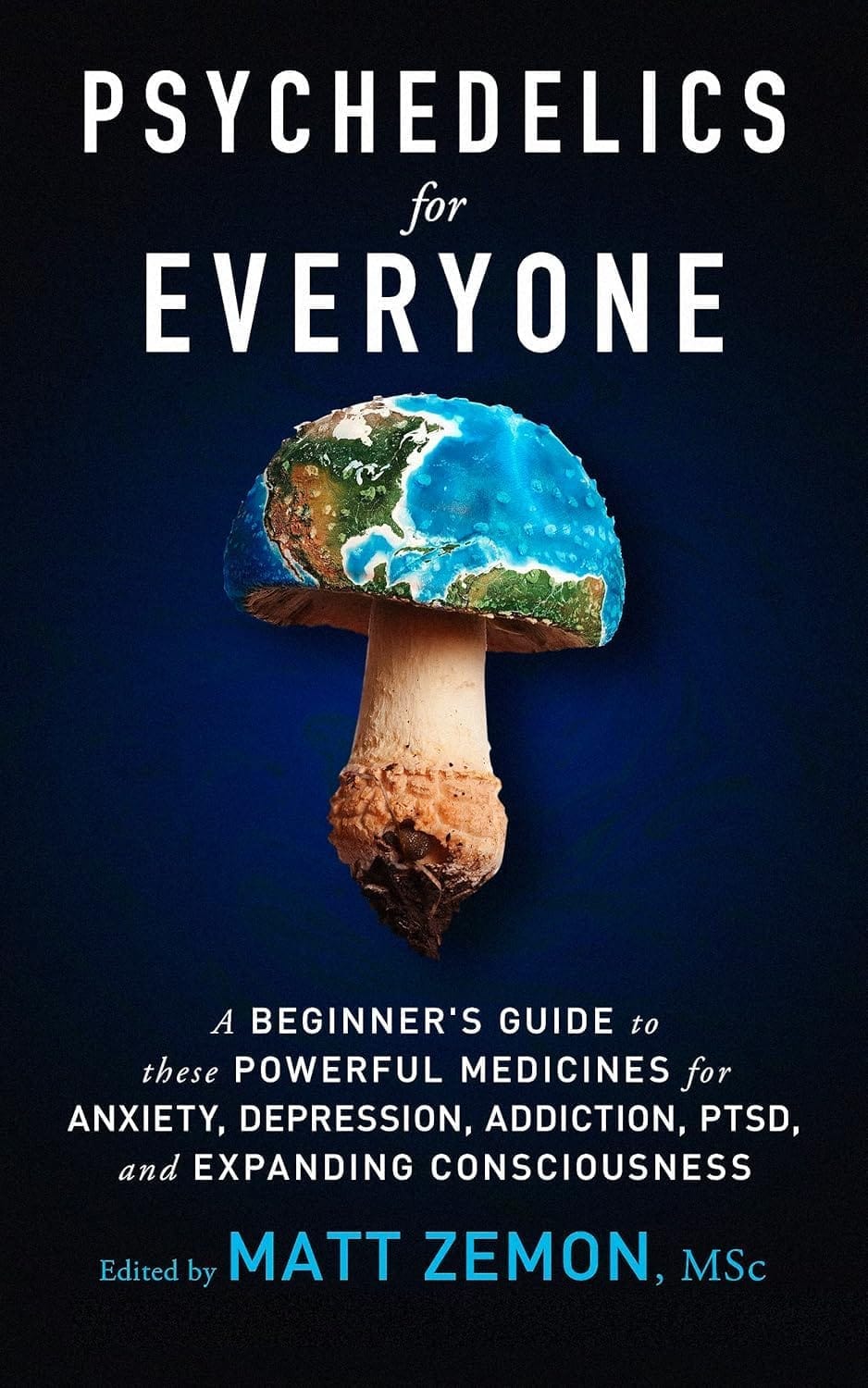
Author of three best-selling books: Psychedelics for Everyone: A Beginner’s Guide to These Powerful Medicines for Anxiety, Depression, Addiction, PTSD, and Expanding Consciousness, Beyond the Trip, A Journal for Psychedelic Preparation and Integration, as well as The Veteran's Guide to Psychedelics: A Preparation and Integration Workbook.
Matt holds a Master's degree from
King's College London and specializes in the impact of psychedelics and mental health, focusing on their potential to catalyze profound personal transformations. Before his own transformative experiences, Matt's entrepreneurial background laid the groundwork for his current mission: to broaden understanding and access to these transformative
substances.
🌐 Connect with Matt Zemon
🔹 Website:https://mattzemon.com/
Don't miss out on our exclusive early bird offer. Enroll now for a huge saving of 30% off!