
SPEAKER | JENNIFER MARCKS
The Benefits of Living Gluten-Free in Today's Society
Scroll below to watch session...

SPEAKER | JENNIFER MARCKS
The Benefits of Living Gluten-Free in Today's Society
3 Key Takeaways
What's wrong with gluten and why we need to pay attention
Benefits you can experience once going GF
Steps to get started on a GF journey today
Hello and welcome to our presentation today. I am so excited to be part of this amazing summit and to share with you the benefits of living gluten free in today's society. So are you wondering, like, what is the big deal about gluten? Why is everyone talking about it and should we all be gluten free? Let's dive in and see what we can figure out.
So finding out that I needed to eliminate gluten was one of the best things that has ever happened to me. And yes, people think I'm crazy to admit this, but it's true. Because going gluten free changed my life. It changed my health, and in turn changed my family's life. Living gluten free allowed me to regain my health as well as discover that my children had celiac disease.
And this has led our family to an overall healthy lifestyle. You see, I had recurring issues, bothersome issues, for years and years and could not find any answers. And finally, after I would say, probably 20 some years, a dietitian said, I don't think you should have gluten now. Well, what is gluten? Right?
I had no idea. This was 15 years ago. So we've been 15 years as a family, gluten free. And let me tell you, friends, it has changed our lives. But when I found out that gluten was disrupting my health, I dove into studying and trying to understand what's happening here.
Why is gluten disrupting me? And as I did, I saw that all the things my children were going through had some connection to gluten, which led us to find out that they had celiac disease. So that is why I say gluten free living has changed my life. I really don't know where our health would be today if we hadn't put the pieces together 15 years ago. So you may be thinking, all right, what is the big deal about gluten?
Why is everyone talking about this and should I pay attention? So I'm glad you're here. You might be thinking, should I be gluten free? Do I need to jump all in? So let's pay attention and see if that's a fit for you.
Maybe you're here because you're intrigued. So can you actually be gluten free within your everyday lifestyle? And yes, you can, my friend. We think it's so overwhelming and such a new step to take. But, yes, you can be 100% gluten free and live a very full everyday lifestyle and do all the things you love to do.
We've done this for 15 years and we're still going. So whatever your motivation for being here, thank you for joining me today for this presentation. I'm so glad you're here because we really do need to pay attention and be proactive for our future. Right? For our health, for the future.
So if we haven't met, my name is Jennifer Marks and I was diagnosed to go gluten free with no support whatsoever. Basically, I was told, y, I think food is your answer. I finally had a doctor that said that after years and years and years of being told, stop stressing out about what you eat. And I would say, I know it's something I'm eating, but I don't know what it is that I'm eating. Well, it was gluten.
So when I went to see a dietitian, she handed me a paper with a list of gluten free breads and said to go get some gluten free bread and quinoa at Whole Foods. That my. That was my initiation to going gluten free. So as a teacher and school administrator, I naturally researched things. So I dove all in and learned how to put my gluten free life in order.
Because 15 years ago, nobody around me was gluten free. They all thought I was crazy, that I was even attempting to do this. But I was seeing a difference. And as we got our gluten free life in order and learned everything that was going on with my health and watching that turnaround and what was going on with my children's health and watching that turnaround, I then became a health coach and a wellness cooking instructor so that I could continue to help others since we had learned so much and it really had changed our lives. So we wanted to do that for others.
So this is my beautiful family and my children, My two older children were in first and third grade at the time of being diagnosed to go gluten free. And as I was diving into everything, my son was very small for his age. Now he towers over me. He's 21. He towers over me.
He's a big college guy, very healthy, but he was really small for his age. When he went gluten free the first year, he grew four inches that year. The doctor was shocked. She goes, yep, that was gluten. Okay.
His teeth development, he's all great now, but he was two years behind. That's textbook celiac. My daughter had very bloated belly. Every night she'd go to bed and what had bloated belly was very stressed out. Mom, I need you.
You know, she always needed me that. Well, she wasn't stressed out. The doctors all told me she was stressed out. She was a happy, go lucky third grader. And she just.
Her body was not working for her. She would go outside and play and come in after five minutes and be like, mom, I'm so tired. That's not a third grader. I was a third grade teacher. Those third graders have a lot of energy, right?
So I knew something was going on. Then she developed vitiligo going down her leg, which is the discoloration of your skin that could spread over your body. So that was a very big concern. And doctors wanted to put steroids and do all these invasive things. And no, I didn't want to go that route.
And unfortunately, she started to have neurological ticks where her arms would just fly out in different directions while she was sitting there talking to you and not even realize this was happening. So for me, I had recurring canker sores. I had a bloated belly. I looked like I was 6 months pregnant most of the time. I had extreme belly pain that was taken to the hospital so many times for.
Because I couldn't even stand up. And I was told each time, oh, you're very healthy. Really. I can't stand up and I'm in excruciating pain. But no one could find anything.
I had headaches, I had neuropathy. The numbing of your hands and your feet, along with many, many, many trips to the bathroom every time I ate. So this was not pleasant and it was very disruptive to my life and went on for years. We don't always pay attention to what's happening. And what happens, friends, is then we think that this is normal, right?
None of this is normal. But when we all went gluten free, all of our reactions and symptoms have gone away. Even the vitiligo on my daughter's leg, it stopped in its tracks. It did not travel any further, and it has diminished. So you really cannot see it anymore.
She's had no more, excuse me, neurological ticks. My son, as I said, he grew 4 inches the first year he was gluten free. And he's continued to be very healthy. He's a towers over me at 21 years old. So gluten has changed our lives.
Taking gluten out has changed our lives. It'transformed And I can't even imagine when I started this. I told you gluten free. Going gluten free is the best thing that's happened, because I can't imagine if we didn't find this out with my children, where would we have gone? Where would their health have taken them?
Right? And to me, that's a scary thought, because think about neurological ticss. You know, the doctor said she could have a seizure at any time. So you're very, as a parent, being told that, that's very scary. All of that went away because the truth is that most people do not equate how they feel to what they have eaten.
Are you doing this? Are you going through your day and having a headache every afternoon? Or your belly bloated after you go to certain restaurants, or you're running to the bathroom after you eat? Or maybe you just have absolutely no energy? We really need to key in and pay attention to all of that because, yes, it can have quite a lot to do with what we're putting on our plate or in our cup.
So what is gluten, and why is this such a big deal today? So gluten is a protein found in wheat, barley, and rye. And this is a protein that is very hard for most people to digest, because here's the truth. Wheat is not the wheat that our grandparents ate. Things have changed quite a lot in the farming practices, as we all know.
And of course, glyphosate plays a role here, too. But according to Dr. Tom O'Brien, he states that really, nobody has the ability to digest today's wheat. And what's even scarier is I just had an amazing conversation with Dr. Anna Toer on my podcast about the new week that's coming out and how much that is changing and what it's going to do to today's society.
It's really going to impact our bodies because it's going to be something that we really cannot digest. And I'm not just talking about people who have celiac disease or gluten intolerance. This is going to impact everybody. So we really have to pay attention to what is on our plate. And gluten is a big thing we find every day on most people's plates.
Right. What do we start our day with? Breakfast with? Bagels or cereal? Toast?
Waffles? Right. That's all gluten. You go to lunch and you have a sandwich, that's gluten. We have dinner and we're eating pasta and bread.
That's gluten. So, yes, when you're told to take out gluten, we basically freak out because, wow, we eat gluten all day. How are we going to survive? Friends, you can survive being Gluten free.
So what is the big deal with gluten, then? Well, gluten causes inflammation in our body. Like I said, we have a very hard time digesting that gluten. And what happens is it messes up our microbiome, it throws off and causes dysbiosis in our gut. Right?
Our good bacteria, our bad bacteria is all thrown off. And when your gut is off, guess what? Your body is off. And this is why we have so many different reactions to gluten, because our gut is just a mess. And then we have to really think about the gut brain connection, right?
And how if your gut is messed up, it's going to start to impact your brain. And that in and of itself is a scary thought, Right? Don't want to go down that path. And then the third thing to think about is when your gut is so incredibly disabled from gluten, what starts to happen is the cell walls of your intestine will start to break down and cause little holes where some of those food particles are now going to enter your body where they're not supposed to be. And then your antibodies come out and start attacking.
And, okay, we don't want you here. You're an invader. So the next time you eat this food that has slipped through your intestines here into your body, what happens is you eat this and then you have a major reaction because your body sees it as an invader, and that is all leaky gut. And that's a whole different conversation. But these are things that gluten is causing, right?
Inflammation problems through your gut and brain connection, messing up your microbiome and leaky gut. So, yes, gluten is a big deal and we do need to pay attention and see is it bothering me, right? Most people will say, oh, you know what, my belly'not bothering me. I can eat gluten. I'm totally fine.
But your belly is not the only issue. When gluten is present in your body, you can have many, many different reactions, which we're going to talk about in a minute. But if you do have celiac disease or gluten intolerance, you do need to be 100% gluten free to the best of your ability to keep your health. Oay. So this is a very important thing.
Often people will say to me, oh, I'm just gluten intolerant. Like, well, what does that mean? Well, you know, I can have pizza when I want. Well, let's think about that. If, you know, you can't digest gluten and it throws your body off.
Why do you want to make your body sick? We don't know where that's going to go. What's going to happen if you continue to eat gluten, right? What's going to happen to your health down the road? If you continue to throw gasoline on the fire, it's going to ignite and it's going to keep on burning and deteriorating your health.
So going 100% gluten free when you have celiac disease or gluten intolerance is really imperative. Now, of course, when we're told to go gluten free, what happens? We fall into that deprivation mindset, oh, woe is me. There's going to be nothing left to eat. What am I going to do?
How am I going to do this, right? And we think of all the foods that we cannot eat. And of course, it doesn't help that in today's society, every movie we watch, every sitcom that's on, everybody's making fun of gluten free, right? Everyone's making fun of how disgusting it is or oh, yuck, you're gluten free. Or if you make a dish, you bring it to a friend and say, oh, here, it's gluten free.
They're like, ah, yeah, put it over there. So we're getting these negative comments, right? That doesn't help us get out of this deprivation mindset. But I like to tell my clients, find that food that you love, whether it's healthy or not, find that food. So you see that you can get it in a gluten free form and you are still going to be able to eat this.
You're not going to live in deprivation forever. And again. My family has been gluten free for 15 years. We do not live in deprivation. We find a way to make what we want in a healthy manner and we enjoy it.
So the big takeaway here, friends, is that we need to be proactive. We need to be proactive to optimize our health and performance for the future, right? So take a moment and stop and really think. How do you feel when you eat? Are you having reactions?
Do you go to a certain restaurant and feel sick every time you leave that restaurant? We used to go to this amazing Mexican restaurant, my family, when we were younger, and we'd all come home and be like, oh, we ate too much. Our bellies are so bloated. And we'd laugh about it. Little did we know we were all also bloated, not because we ate too much, but because all the food was full of gluten and it was taking our health away, right?
It was knocking us down. So paying attention to those things, that's not normal. We should eat and feel good. We should eat and have the energy to get through the day. We should not be eating and being derailed for the rest of the day.
So think about that. What is your body telling you? Are you having recurring headaches? Do you have neuropathy or pain in your joints? Is your belly bloated?
You having a lot of gas? Gas is normal, but excessive gas is not, right? So paying attention to what your body's telling you is really important. And a good way to track that is to have a food diary where you write down what you've eaten and then what your reactions are throughout the day. Because the trick here is this is your scientific method of figuring out what is it that is really knocking you down.
And once I went gluten free, I started to feel worse. Now, first, of course, your body's detoxing all that gluten, but I was not getting better. I was really deteriorating quicker after going gluten freeame. What is happening? And it was because I was eating a lot of corn.
Now, again, at the time, I had nobody helping me, so that was not a good substitute for gluten, Right? Corn is also inflammatory. But I found out from my food diary, tracking my food and when I had reactions, that corn really was an issue for me. But the trick was corn didn't react. Excuse me, I didn't react from corn that first day.
I reacted from corn the next day. And that's a very hard thing to track if you're not, you know, if you're not paying attention and writing it down. We think we're going to remember these things, but we don't. So when you take the time to write things down, you will see that I never would have figured out corn. I had a reaction the next day if I didn't do that.
And that changed everything for me. Because once I took corn out, then I really got my health back. So really think about, what do you need? Do you need to go into the future by looking at, okay, I need to move my body more. I need to have more exercise in my life.
Maybe you need more relaxation. Try some meditation or journaling, right? Maybe you just need to drink more water. And friends, when we talk about taking a small step to make a big reward, drinking more water is the small step that you can start today, take water instead of your Coca Cola or your Coffee. You're going to see a huge difference in that one little step.
Sleep is really important, and if you're not getting enough sleep, that alone can. Can really cause disruption in your gut. So if your gut'already off and then gluten is added to that, that's really going to throw you off. So look at all of these places. Do you need to be moreention intentional about what you eat?
Being intentional about your plate can also change things. When you start reading labels, when you start paying attention to how many vegetables are you eating? Okay, what are you swapping out for? Gluten? That is going to be a healthier alternative, right?
Paying attention and making those small tweaks is really going to help you to move your body into the future. But the good news is, even though we have a lot to worry about and a lot to put in place and a lot to understand to go gluten free. There are so many benefits of living gluten free that, yes, it is worth taking this journey. So first and foremost, guess what. You know that gluten is causing your issues, and that is something to celebrate, especially for me, because how many years did it take?
Right? Took, I would say over 20 years to know that gluten was my culprit. I can remember all the way back to high school, laying on the bathroom floor, curled up in a ball in pain and being told I was healthy. Being rushed to the hospital as a young mom, just from walking up the stairs, oh, maybe you're having a heart attack. Oh, no, you're totally healthy.
Like, what is wrong with my body? My body just kept breaking down. When I knew gluten was the issue and took it out, that changed everything. So when you have an answer, when you have that root cause of what's causing whatever reactions and symptoms you're having, you need to celebrate that. It might not be what you want to hear, but you need to celebrate that so you can now move forward and put the steps in place.
A big piece of going gluten free is getting rid of your reactions and your symptoms because they are debilitating to your everyday lifestyle. My recent client, Deb, loved to dance, but guess what? Gluten controlled her life so much that she would wake up in the morning and have to see how she was feeling before she could even go out the door to her dance class. Because if she was having reactions, that day wasn't happening. We have to stop gluten from controlling our lives.
So when we take it out and those reactions go away, those symptoms Go away. It is life changing now. Deb goes out and dances all the time and she is enjoying her life again. So your reactions and symptoms can be an array of so many different things, like headaches, canker sores, neuropathy, which is the numbing of your hands and feet, body aches, joint pain, brain fog, throwing up, bloating, intestinal pains, gas constipation, diarrhea, vitiligo rashes, brain health decline. These are just some of the symptoms that can be happening.
Just some. There are hundreds of symptoms that we can get from gluten, and they can be different for everyone, which is why diagnosing celiac disease or gluten intolerance is not always the first thing that we think about, because all of these symptoms and reactions can be pointed to many other issues in health, right? So we have to be proactive. We have to pay attention to our body. When is this happening?
When are these reactions happening? And when are these symptoms happening? Oh, wow. After I've had gluten, take out gluten and they go away. Amazing.
When you take out gluten, you can have more energy. Friends, we should eat and have energy. We should not be eating an U, laying on the couch, being wiped out, getting sick, having all those reactions. When you take out gluten, you can have more energy because guess what, Your body is not spending all of its energy trying to regain your health. Instead, you have that energy to go out and do the things you want to do, whether that's dancing or going out with your friends or going for a walk or a run.
Right? You have more energy, which is again, life changing. After you've been debilitated by all of these symptoms and reactions, you can say goodbye to inflammation. When we talked about gluten before, we said, yes, gluten causes inflammation in the body. Gluten causes inflammation for everybody, not just people who have celiac disease and gluten intolerance.
Gluten causes inflammation. So if we take out inflammation that can go down in your body. Now, inflammation is the root cause to many diseases, so it's very important to pay attention to this. And gluten is not the only culprit. Soy, corn, dairy, sugar, these are all things that also can cause inflammation.
But taking gluten out can really set you on the right path. How would you like to eat and feel good? That's an amazing concept because as I grew up and was sick all the time and thinking about what is causing this and really not knowing, I just thought that was the way to live having canker sores all the time, Always sick after I eat. When I went gluten free and started feeling better and I ate and felt good and had energy, I was like, oh, my gosh, this is wow, this is a great feeling.
How would you feel if you could eat and feel good instead of eat and feel crappy all day, Right? Life changing. You have the energy to go back out and start living your best life again, right? When we went gluten free, we expanded our plate. We learned about so many new foods that we had not paid attention to, like quinoa.
When that nutritionist told me to go get quinoa, I was not eating quinoa at that time. I was not drinking smoothies at that time. Those are two things that we eat every week at our house, right? Or drink. We learned about so many different foods.
I grew up baking with my mom and we love to bake. So when I gluten free, I thought, oh my gosh, how am I going to bake now? It was part of who I am. I love baking for friends and family. And then how am I going to bake?
Healthy, right? How are we going to do this? Do you know how many gluten free flours there are? There are so many flours that you can use. We grew up using one wheat flour.
Who knew there were so many options? I had no idea. So we learned about new baking flours. We have created amazing baked goods that we share with our friends and family that are healthy alternatives. Because guess what?
We're in charge of which flowers we use. We're in charge of which sugars we use natural sugars. Changing your plate, right? It's going to change your life. We learned about so many different foods in the baking arena, but we've also learned about more vegetables and different options out there for grains.
There are many grains that we hadn't eaten before, like millet or teff. Different things you can learn about expanding your plate, and that's just going to expand your health, my friends. Now, if you go gluten free, it's very often that this will help maintain other autoimmune diseases. And that goes right back to taking out the inflammation. I work with a friend who teaches how to reverse ms, and in her program, we are teaching them how to go gluten free.
Because when they have inflammation, it really sets off their ms, right? So maintaining other autoimmune diseases. It's really important to go gluten free so that you can do that, so you can help diminish the symptoms you're getting from those autoimmune diseases and often sometimes reverse that. And again, reversing health issues. If your gut is so incredibly messed up from gluten and you're in dysbiosis and your microbiome is just a mess, when we take out that gluten and we regain our intestinal health, that helps your whole body get better.
Because your health is in your gut, right? If your gut is off, your health is off. So taking out gluten is going to really help turn that around. And not all of that, my friends, is going to give you a better outlook for your future. Because we are going to get away from just trying to get through the day feeling terrible and pulled down and sick all the time, reacting all the time to having more energy, feeling good, eating and feeling good, trying new foods.
All of this is going to give you a better outlook on going into the future with better health, which then helps you create a healthier lifestyle. As my family went gluten free, we realized the more intentional we became about our gluten free plate, the better we felt. We added in more vegetables, more whole foods, we started thinking about meditation or journaling and following a healthier lifestyle. But here's the thing. Gluten free does not mean you're healthy.
What? What does that mean? Right? Gluten free does not mean you're healthy. If you are gluten free and you.
Well, I've had people say to me, oh, it's so easy to go gluten free. There's so much at the grocery store now, I don't need any help. I've got this. And they go to the grocery store and they buy all those gluten free packaged foods and think they are healthier for it. Friends, gluten free packaged foods is just as bad as the SAD diet, standard American diet, because all those processed foods are still processed foods.
We have to be intentional about which processed foods, if any, are you choosing. Reading labels, being intentional about what we choose to put on our plate. I like to tell my clients, if you pick up a label and it's as long as your arm, put it back, there's too much in there that you don't need to deal with. And also, if you look at a label and you cannot read those words, do we want to put that in our body? Those are things to think about.
It's probably not going to be something healthy if you can't read it and you don't know what it is. What is that? Going to do to your body. We knew that gluten has already derailed our health. We don't need to do that further.
We're trying to turn that around. So creating a healthier lifestyle while being intentional, moving forward with putting pieces in place, what do you need in your life to be healthy? Right. But yes, you can have a very healthy lifestyle being gluten free. So you can see there is so much to celebrate when going gluten free.
Yes, there's a lot to understand and a lot to put in place, but there is so much to celebrate that it is worth going through and understanding how to put a gluten free lifestyle in place, because you're going to transform your health and create a healthier future. So what do you think? Could you improve your health by living gluten free? Is it something that would benefit you? I really believe that when you change your plate, you change your health, you change your life.
But the thing to remember is that gluten free is not just a diet. We're not just changing our plate. It is a lifestyle. So we have to understand that it is entwined in everything we do. I mean, think of right now.
It is about Lent time. Lent is starting right when we go to church and you receive the host at church that has wheat in it. And even when the church says, oh, it's a gluten free or low gluten host, it still has wheat in it. I still react to that. So we have to find all of those hidden gluten pieces and take them out.
Right? So everything is entwined. When you go to the dentist, they need to use gluten free pae to clean your teeth. When you go to the doctor, before they put drops in your eyes or whatever they're just going to do without talking to you, we have to ask, is that gluten free? Are we all set with that?
We are always standing up for our health, but it is an entire lifestyle. And friends, once you don't let that overwhelm you, once you put it in place, it just becomes routine. And of course you need the strategies, the tools and the steps to get there. But when you take small steps, you can get there and in an easy and efficient manner. As I just said, taking little steps and having the right roadmap to follow will create big results in a healthier lifestyle for you.
You're going to be going from surviving through your day, right? All those reactions and wondering what to eat and how to feel good to get through the day to thriving through your day. Like how life changing is that?
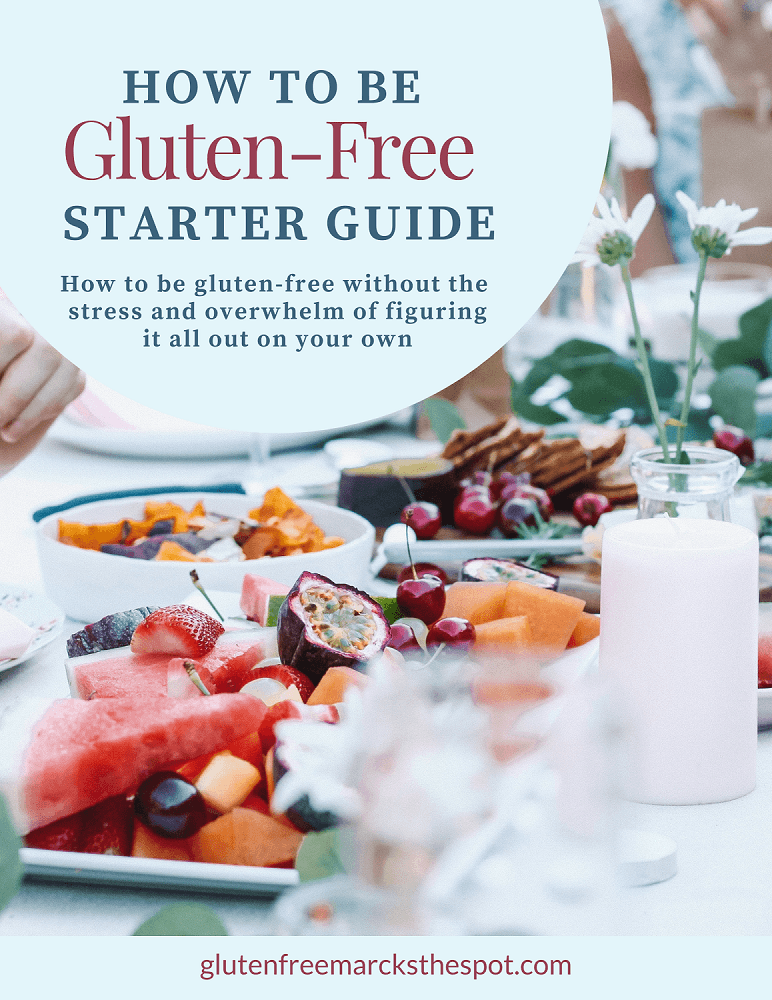
So why am I here? Why am I talking to you? And how do I actually help? Well, before you go anywhere, grab my gluten free starter guide. It's going to give you five steps to start putting a gluten free lifestyle in place that are easy, manageable steps that you can start to help you on your way to living gluten free.
And when you grab that today, you're going to get my little gluten free recipe booklet which has some of our family favorites in there. So that link should be with this video. I work with clients and families one on one to help them create a gluten free lifestyle that works for them. Because the truth is it's different for everyone. Some families have one person that's gluten free and like us, we're all gluten free.
So there's a big difference in how you would set that up and how you would move forward. I teach gluten free cooking classes and this is my favorite thing to do either on Zoom or in person, small group or individual. And I love to do this because like I said, we are bombarded in society of everybody putting down gluten free food. Right? E Yuck.
It's gluten free and I love to show you that it is easy to make, it can be easy to make and it is delicious. And I love teaching clients. Look, we use these simple ingredients, you make these delicious dishes and you enjoy being gluten free. You are not living in deprivation at all. I also offer a membership which is a monthly membership where students go through each month and develop and create their gluten free lifestyle one step at a time, building upon the next in an easy and secure fashion.
So friends, you can come on over and connect with me over on my website, glutenfreemarcksthesspot.com. I have lots of delicious recipes there for you, lots of great resources and a lot of information that you can read through to start putting your gluten free life in place. And I'd love to invite you to join me over on my podcast, the empowering your gluten free growth Podcast where we are really focusing in on saying goodbye to gluten for good so you can create a sustainable and delicious gluten free lifestyle. Sustainable because once you're gluten free, friends, you want to be gluten free continuously, right? We have to sustain that. How do you do that?
We talk about that on the podcast. And delicious because yes, I want you to see how delicious gluten free can be. So you can see there's a lot to put in place when we think about gluten and when we're taking a gluten free journey. But also I hope that you saw that there are lots of benefits when you do go gluten free and put this in place and I would love our success to be your success. You can do this.
You can take out gluten and feel better and think about those steps. What do you need to be proactive for your future to create and optimize your health and performance, moving into the future so that you have the health you need to continue living a great lifestyle? What steps do you need? Grab a journal and start tracking what you eat, how you feel and think about those other steps that you need. All right friends, I hope this helped you today.
Enjoy the other talks in the summit. I know I am and I wish you to have a delicious gluten free day.
About Jennifer Marcks
JENNIFER MARCKS | SPEAKER
Jennifer Marcks is a Gluten-Free Health Coach who helps women finally say goodbye to gluten for good to create a sustainable and delicious gluten-free lifestyle that one day becomes routine.
As the creator of Gluten-Free MARCKS The Spot, Jennifer helps women fall in love with their gluten-free life. Having Celiac Disease and gluten-intolerance in her family, she knows exactly what you are going through. Jennifer helps empower your kitchen skills to gain back your energy and learn how to change your plate to change your life. You’ll be amazed as your family starts devouring your new gluten-free meals. She’ll help you ditch the overwhelm and have you back with coffee with friends, lunch with the girls and traveling to the beach on vacation. No more sitting on the couch and missing out on life!
When Jennifer is not whipping up a new gluten-free treat, she can be found reading a good book, going for a walk, snuggling up with her family for games, or binge-watching Netflix.
🌐 Connect with Jennifer
🔹 Website:https://glutenfreemarcksthespot.com/
Don't miss out on our exclusive early bird offer. Enroll now for a huge saving of 30% off!